
Respect Croatia's Wild Nature: A Guide to Venomous and Dangerous Creatures on Land and at Sea
Croatian nature beckons with dramatic mountain ranges and crystal-clear Adriatic waters. Yet, among sun-warmed cliffs, shaded forest paths, and sandy seabeds live a few species that require our vigilance. Here is your guide on how to recognise the country's venomous animals and avoid unpleasant encounters.
Croatian nature is full of contrasts. Here, rugged limestone mountains, fragrant pine forests, and one of Europe's clearest seas meet. It is a landscape that invites hiking, climbing, and long days on the beach. But just like in any wild ecosystem, there are inhabitants that carry an effective chemical defence.
Although serious incidents are rare and most holidaymakers return home with nothing but a tan and wonderful memories, peace of mind increases if you know what to look out for. From the mountain trails of Velebit to the sun-warmed sandy beaches of Istria and Dalmatia – here is the guide to Croatia's venomous animals, where they are found, and how to avoid them.
Vipers of the Mountains and Forests: Poskok and Riđovka
When you leave the coast to hike in the forested mountain areas of Gorski Kotar or along the dramatic cliffs of Velebit, you step into the territory of two of the country's most famous vipers: poskok (horned viper) and riđovka (common European adder).
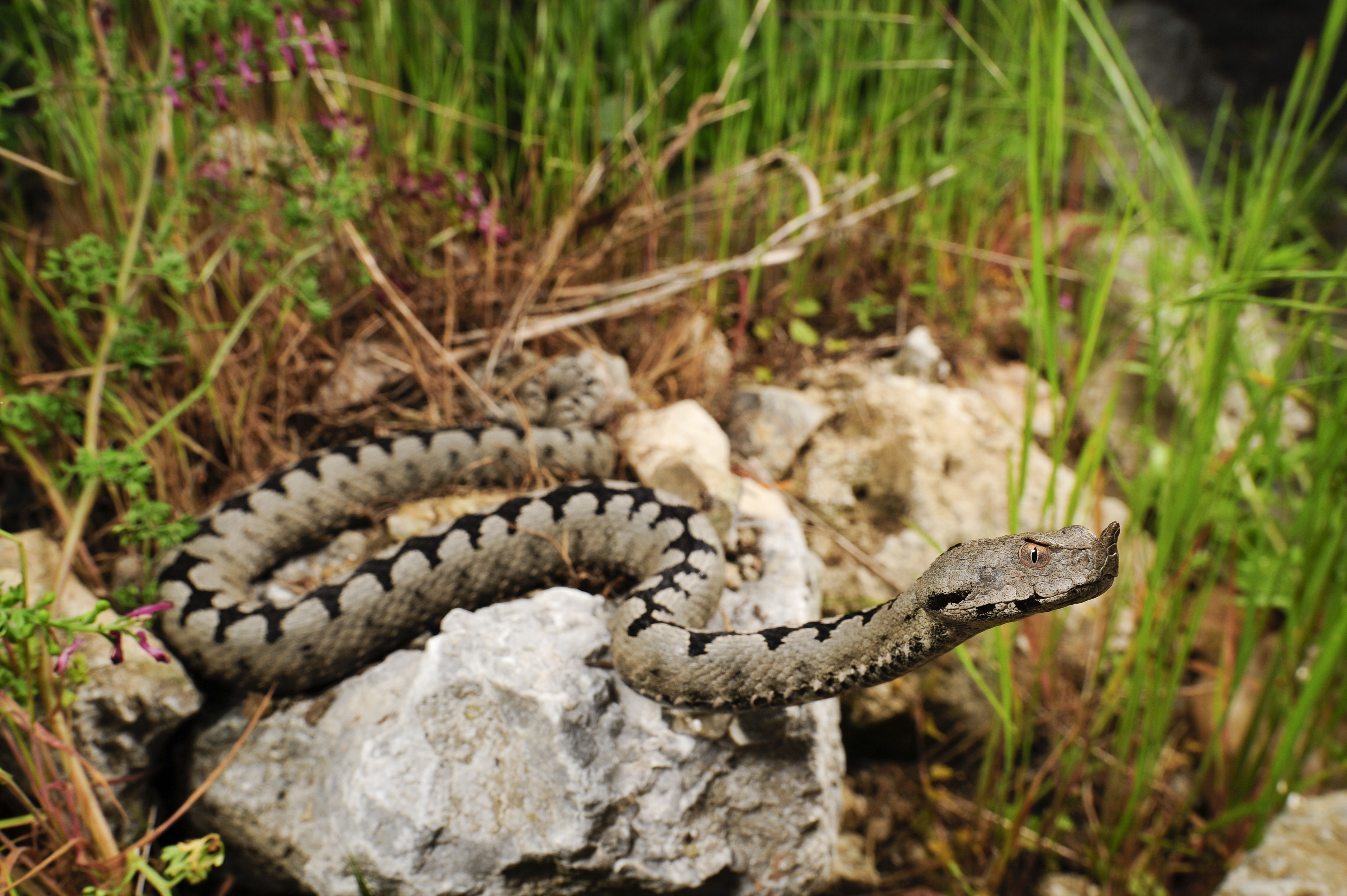
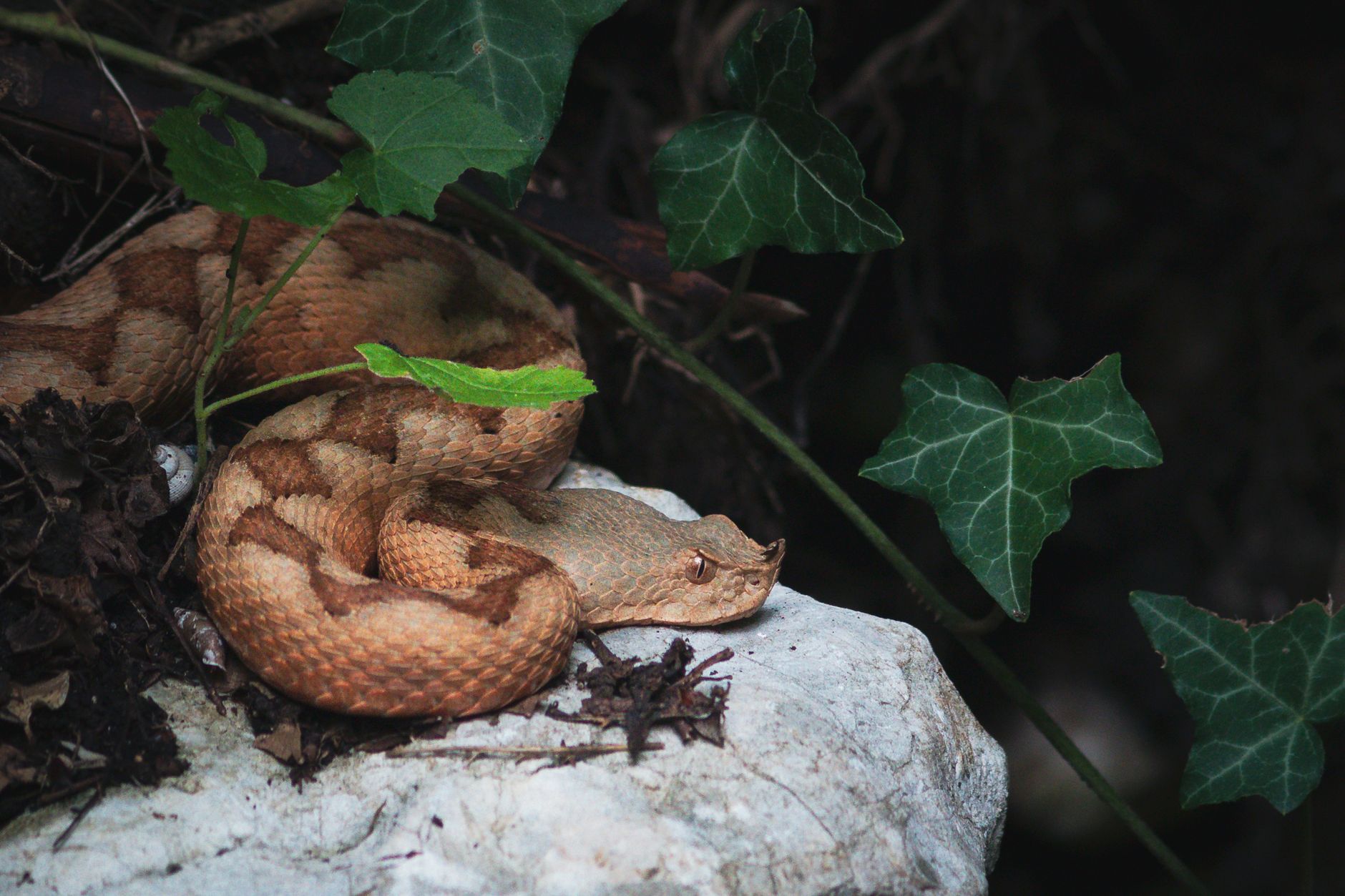
The horned viper (Vipera ammodytes), locally called poskok, is easily recognised by the small horn-like protrusion on its snout and the distinct zigzag pattern on its back. It thrives best in dry, rocky environments, on sun-baked rocky ledges, and in old stone walls, but can occasionally climb low bushes. Its venom is potent, and the species is considered one of the more venomous vipers in Europe. The common adder (Vipera berus), or riđovka, prefers damper forest areas, meadows, and bogs. It lacks the snout horn but has a similar zigzag pattern and can vary in colour from grey to almost entirely black.
Both species are naturally shy animals that would rather flee than attack. They only bite in self-defence, for example if they are accidentally stepped on or startled at close range.
The Hidden Danger of the Countryside: Black Widow in Istria and Dalmatia
Along the coastal areas and on the islands of Istria and Dalmatia lives a much smaller but equally respectable resident. The black widow (Latrodectus tredecimguttatus) is a medium-sized spider that is easy to identify by its round, deep black abdomen adorned with up to thirteen characteristic red or orange spots.
The spider builds its webs close to the ground, often under rocks, in dry grass, in cavities in old walls, under garden machinery, or in abandoned car tyres. It is not aggressive and only bites if squeezed, for example if you happen to sit on it or pick up a stone where it has its nest.
A bite from a black widow is often barely noticeable at first, but within an hour, intense pain develops and spreads through the body, often accompanied by muscle spasms, sweating, and nausea. If you suspect a bite, you should seek medical attention.
When moving around the countryside near towns like Pula and Poreč, or out on the Dalmatian islands, you should avoid turning over old pieces of wood or reaching into untidied outdoor sheds without work gloves.
Hidden Threats of the Sea: Weeverfish and Jellyfish
The Adriatic waters are famous for being clear and inviting, but even beneath the surface, there are species that require you to watch where you step or swim.
One of the most common causes of painful encounters in the water is the greater weever (Trachinus draco). This elongated fish is a master of camouflage and often lies completely or partially buried in the sand in shallow water. It has venomous spines on its dorsal fin. If a swimmer steps on the fish, the spines are pressed into the foot, injecting a venom that causes an intense, throbbing pain that rapidly spreads up the leg.
Another occurrence in late summer can be periodic appearances of stinging jellyfish. The most well-known species in the Adriatic Sea is the mauve stinger (Pelagia noctiluca), a small but beautiful pinkish-purple jellyfish with long, almost invisible stinging tentacles. Contact results in an immediate burning sensation and leaves red, itchy whip-like welts on the skin that can persist for several days.
There are also other marine creatures to keep an eye on. Scorpionfish often lie completely still on rocky sea beds and have venomous dorsal spines. The common black sea urchins are not venomous in themselves, but their limestone spines easily break off inside the skin if stepped on, which can lead to troublesome infections. Blue sharks and other larger sharks live in the deeper parts of the Adriatic Sea, but they stay far out at sea and pose no real threat to ordinary swimmers along the beaches.
If an Accident Occurs
If you suspect a snakebite, spider bite, or sting from a venomous fish or jellyfish, or if someone has difficulty breathing or facial swelling, call the emergency number 112 or the ambulance service on 194 and follow the operator's instructions. According to Croatian authorities, emergency calls to 112 can be made in English and German, among other languages.
By packing a pair of sturdy hiking boots for the mountains, a pair of water shoes for the beach, and keeping the emergency number 112 close at hand, you can safely set out to experience all the beauty that Croatia's nature has to offer.
Facts
Croatian Emergency Numbers
- General emergency number: 112 (toll-free, 24/7)
- Emergency medical care / ambulance: 194
- Maritime rescue (MRCC Rijeka): 195
- Police: 192
- Fire service: 193
- Mountain rescue (HGSS): reached via 112
Sources & further reading
- explore-croatia.netDangerous Animals in the Adriatic Sea: What to Know Before You Swim - Explore Croatia
- total-croatia-news.comStay Safe on Your Holiday: Croatian Wildlife and Marine Animals to Avoid - Total Croatia
- hr.wikipedia.orgCrna udovica – Wikipedija
- prirodahrvatske.comCrna udovica (Letrodectus tredecimguttatus) - Priroda Hrvatske
Share the article
Translated from Swedish with AI assistance. Read the original.


