
Rakija leaves the kitchen table – and steps into the premium bar
For generations, rakija has been the drink that appears the moment a guest crosses the threshold, when the family celebrates, and when grief is shared. Now, the Balkans' ancient fruit spirit is meeting a different world: modern distilleries, oak barrels, designer bottles, international juries, and export markets. The question is not whether rakija can become the next whisky. The question is whether it can finally be allowed to be itself.
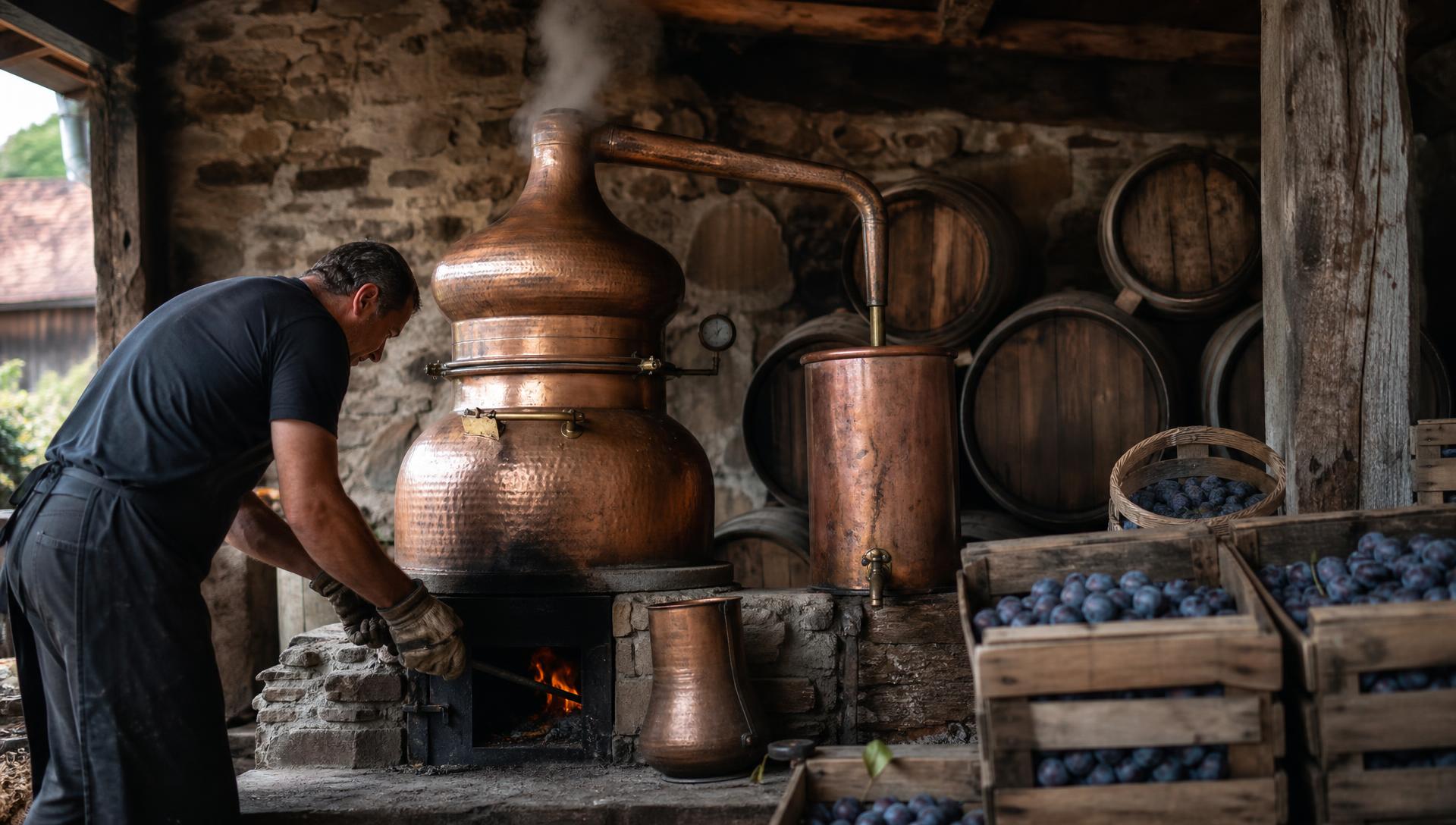
There are drinks that are presented with a wine list. And then there are drinks that are placed on the table before the guest has even had time to take off their coat.
Across much of the Balkans, rakija has long belonged to the latter category. It is present at weddings and family celebrations. It is brought out to welcome someone and to bid them farewell. It might stand in an unlabelled bottle in a kitchen, but also in a cut-glass tumbler at a restaurant.
For many families, it is not primarily a product. It is an act. Someone grew the fruit, someone waited for the perfect ripeness, and someone stood beside the copper still as the spirit slowly trickled out. And someone will almost always have a firm opinion on who in the family makes the best.
But something is changing.
Alongside the old home-distilling tradition, a modern, professional rakija culture is emerging. Distilleries are working with controlled production, carefully selected fruit varieties, ageing, design, and international sales.
Rakija is not leaving its history behind. It is learning how to sell it.
When UNESCO didn't protect the bottle – but the people around it
One of the clearest acknowledgements came in 2022. That year, UNESCO inscribed 'Social practices and knowledge related to the preparation and use of the traditional plum spirit – šljivovica' from Serbia on the Representative List of the Intangible Cultural Heritage of Humanity.
This is an important distinction. UNESCO did not designate a specific bottle as a world heritage site.
What was recognised was the knowledge and social practices surrounding šljivovica: the cultivation and harvesting of plums, fermentation, distillation, ageing, and how the drink is used in the daily lives and rituals of families and local communities.
UNESCO describes how the knowledge is traditionally passed down through generations and how šljivovica accompanies toasts at family celebrations and other festivities. The organisation also highlights the craftsmanship involved in the copper stills used for distillation.
It is almost the perfect explanation of why rakija is difficult to understand if you only view it as alcohol. The bottle is the end product. The culture is what surrounds it.
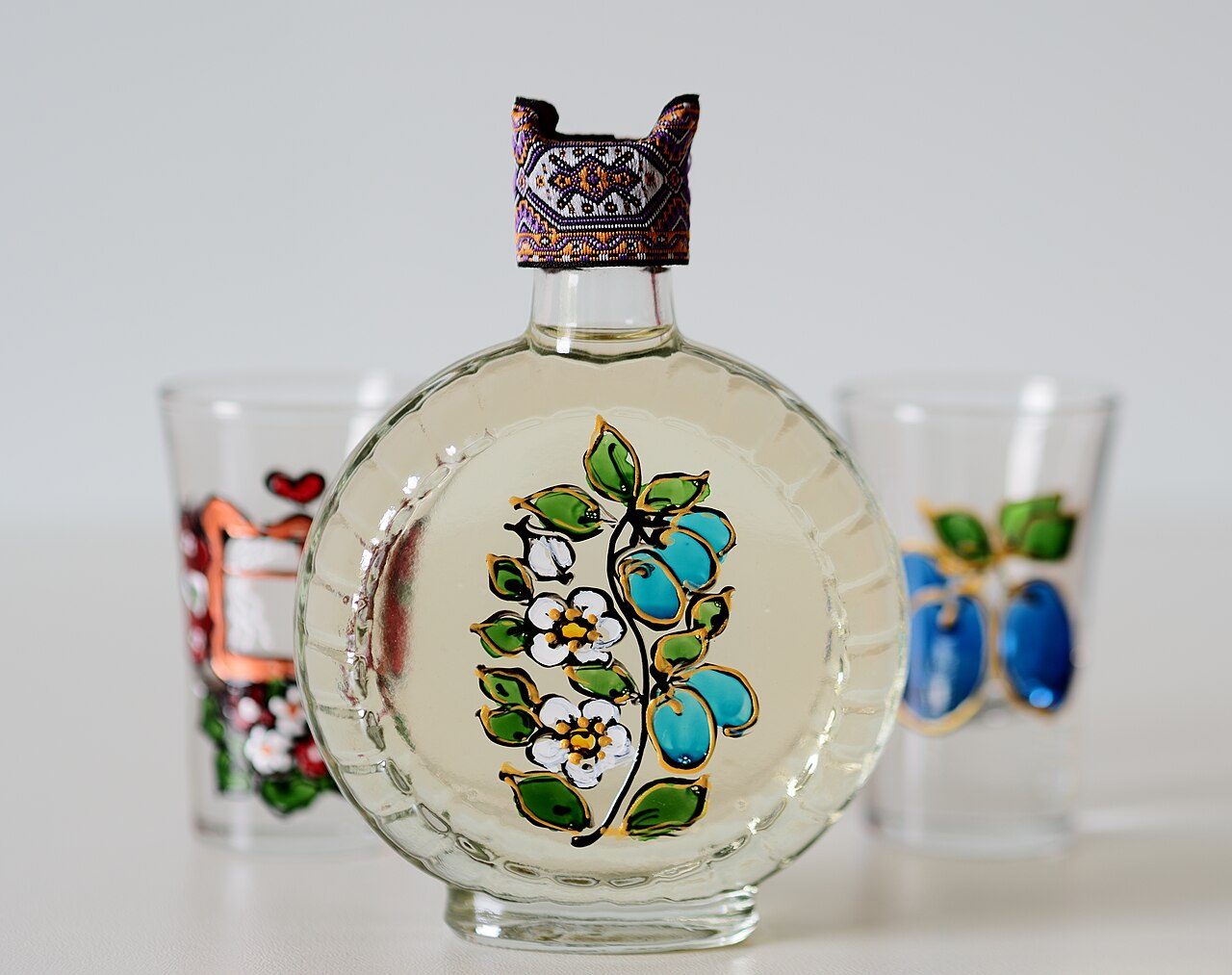
From plum to pear – rakija is not a single flavour
Outside the Balkans, the word rakija is sometimes used as if it described a single drink. It does not.
The fruit changes the entire character. Šljivovica is made from plums and is the most iconic variety in Serbia. Viljamovka is made from Williams pears and has a distinctly aromatic fruitiness. Kajsijevača is based on apricot, and dunjevača on quince. Added to this are grape-based spirits and a host of local variations.
This is roughly where rakija's modern potential begins to emerge. If the drink is only presented internationally as 'Balkan brandy', much of what makes it interesting is lost.
The difference between an oak-aged plum rakija and a clear quince spirit can be vast. It is not just a matter of different labels, but of different raw ingredients, aromas, and expressions.
And then comes the barrel
Another old misconception is that good rakija must, above all, be strong. But alcoholic strength is not the same as quality.
In serious production, the work is about the raw ingredient, fermentation, distillation, and – for certain styles – ageing. UNESCO's description of traditional Serbian šljivovica outlines the fermentation of plums, distillation in copper vessels, a possible second distillation, and subsequent ageing, traditionally often in oak casks.
This is also where a modern premium category can begin to speak a language that international consumers already recognise from whisky, cognac, and other spirits: casks, fruit variety, origin, and time.
But rakija does not need to imitate whisky to become premium. On the contrary. Perhaps its greatest asset is precisely that it is not whisky.
From the cellar to the designer shelf
Look at today's professional rakija market, and the old stereotype begins to shatter. Bottles have become sophisticated, labels tell the story of fruit varieties and origins, and some distilleries combine family tradition with modern production techniques and controlled ageing.
Rakija is also being judged in professional contexts. At the Open Balkan Rakija Trophy 2025, 15 judges assessed a total of 105 samples in categories including plum, quince, grape, and other fruits.
The same year, Wine Vision by Open Balkan gathered spirits from more than a hundred exhibitors from Serbia and the region.
This does not mean that rakija is suddenly competing with whisky or cognac in terms of global sales volume. We should be cautious about making such claims.
But it shows that a drink long judged at the kitchen table is also building institutions around itself: producer organisations, competitions, professional juries, and international marketing.
Düsseldorf, March 2026
In March 2026, rakija appeared in a setting far removed from the family copper still.
At ProWein in Düsseldorf – an international trade fair for wines and spirits – Serbian fruit spirits were presented to trade visitors. On 17 March, a special masterclass titled 'Serbian Rakija Connecting People' was also held, led by Ivan Urošević, an international spirits judge and vice-president of the Serbian rakija producer organisation.
It is a small stage in a much larger global spirits industry, but the symbolism is hard to miss.
The drink that for generations required no marketing, because everyone in the village already knew who made the best, is now facing a completely different audience – an audience that may never have heard the word dunjevača.
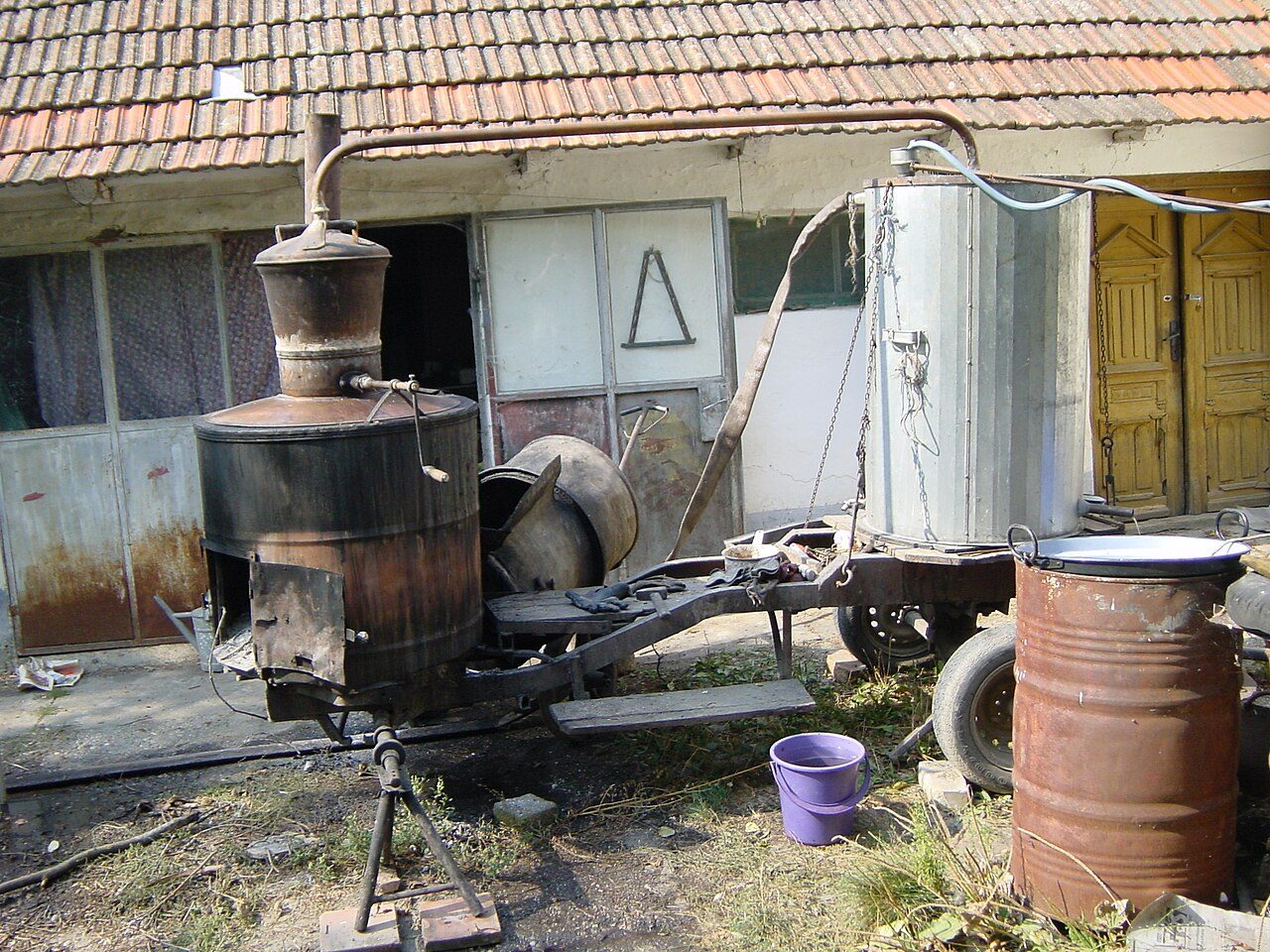
Origin becomes an asset
When a traditional product enters an international market, another question also arises: who is allowed to use the name?
Geographical indications have become an important tool for food and drink, as they link a product to a specific origin and defined characteristics or production conditions. The EU system also covers spirit drinks.
Serbia's agreement with the EU lists, among others, Srpska šljivovica among Serbian spirit drink names with a geographical origin, along with several geographically defined grape distillates. In Serbia, Šumadijska šljivovica, for example, has also received national recognition as a geographical indication with defined production requirements.
It may sound bureaucratic, but for the future of rakija, it is central.
If producers want to sell origin, craftsmanship, and quality in the same way that other major drink categories do, the consumer must be able to understand the difference between a geographically anchored spirit and a bottle that merely uses Balkan aesthetics on its label.
The Balkans is bigger than a bottle
Of course, rakija does not belong to Serbia alone.
Various forms of fruit distillates have deep traditions across several parts of the Balkans, with their own raw materials, names, and local cultures. In Bosnia and Herzegovina, for example, there are modern distilleries trying to combine traditional methods with modern production and sell premium rakija to Western European markets as well.
It would therefore be a mistake to try to create a single, standardised image of 'Balkan rakija'.
Rather, the interest lies in the variation: plums from one area, quince from another, and grapes elsewhere. Family recipes exist alongside modern distilleries, clear spirits alongside dark, wood-aged expressions.
A true premium category does not need to erase these differences. It can build its value upon them.
The problem with the famous plastic bottle
Almost every family from the Balkans recognises it: an old water or soft drink bottle, no label, and a clear liquid.
And a relative saying:
This one is the real deal.
It is charming. It is also a marketing problem.
At the same time, the cultural strength of home-distilled rakija has made it harder to establish a clear international image of quality. If, outside the region, rakija is primarily associated with extreme alcoholic strength, souvenir bottles, or something an uncle distilled behind the house, it is a big step to a bottle that costs as much as a serious premium spirit.
Professional producers must therefore do something rather difficult: convince new consumers that rakija can be sophisticated, without offending the culture that created it.
Perhaps rakija does not need to be the next anything
When smaller spirits categories seek international attention, comparisons quickly follow. Can rakija be the next tequila? The next mezcal? The next grappa?
But perhaps that is the wrong question.
Tequila's strength is that it became tequila. Mezcal's strength is that it did not try to become whisky.
The opportunity for rakija likely lies in the same thing. It has the fruit, the craftsmanship, and the regional variations. It has the generations and the rituals. And now, it is also starting to acquire the modern infrastructure around it: professional distilleries, competitions, geographical indications, and international presentations.
Rakija, therefore, perhaps does not need to leave the kitchen table at all. That is where its history lies.
The challenge is rather to find room both there and in the premium bar.
And that when someone in Stockholm, Berlin, or London orders a glass of šljivovica one day, the question will no longer be:
What is rakija?
But:
Which one?
Rakija · Quick Guide
Šljivovica – Plum spirit and the most classic Serbian rakija style. Can be clear or aged, often in oak.
Dunjevača – Quince rakija. Often distinctly aromatic with a character that differs markedly from plum.
Kajsijevača – Apricot rakija. Fruity and aromatic, where the aroma of the raw fruit is a key part of the experience.
Viljamovka – Distillate of Williams pears, known for its distinct pear aroma.
Lozovača – Grape-based rakija. Should not be confused with fruit rakija such as plum or quince.
What does 'prepečenica' mean? – The term is used for rakija that has undergone double distillation, traditionally to concentrate and refine the spirit.
How is it drunk? – There is no single rule for all rakija. Type, age, and style all play a role. Serious tasting is more about aroma, raw ingredient, and balance than about who can handle the strongest gulp.
Sources & further reading
- UNESCOSocial practices and knowledge related to the preparation and use of the traditional plum spirit – šljivovica
- Wine Vision by Open BalkanOpen Balkan Rakija Trophy
- Messe DüsseldorfProWein Düsseldorf
- Europeiska kommissionenGeographical indications for spirit drinks
Share the article
Translated from Swedish with AI assistance. Read the original.


