
Pedals, riverside cafés and car-free avenues – how Ljubljana became the cycling capital of the Balkans
While Nordic cities are often seen as global pioneers of cycling, a quiet revolution has been taking place in south-eastern Europe. In just over a decade, the Slovenian capital Ljubljana has transformed its noisy, car-filled streets into a connected, green living room where the bicycle is king. Through bold urban planning and inspiration from the north, the city has created a way of life that challenges our own cycling capitals.
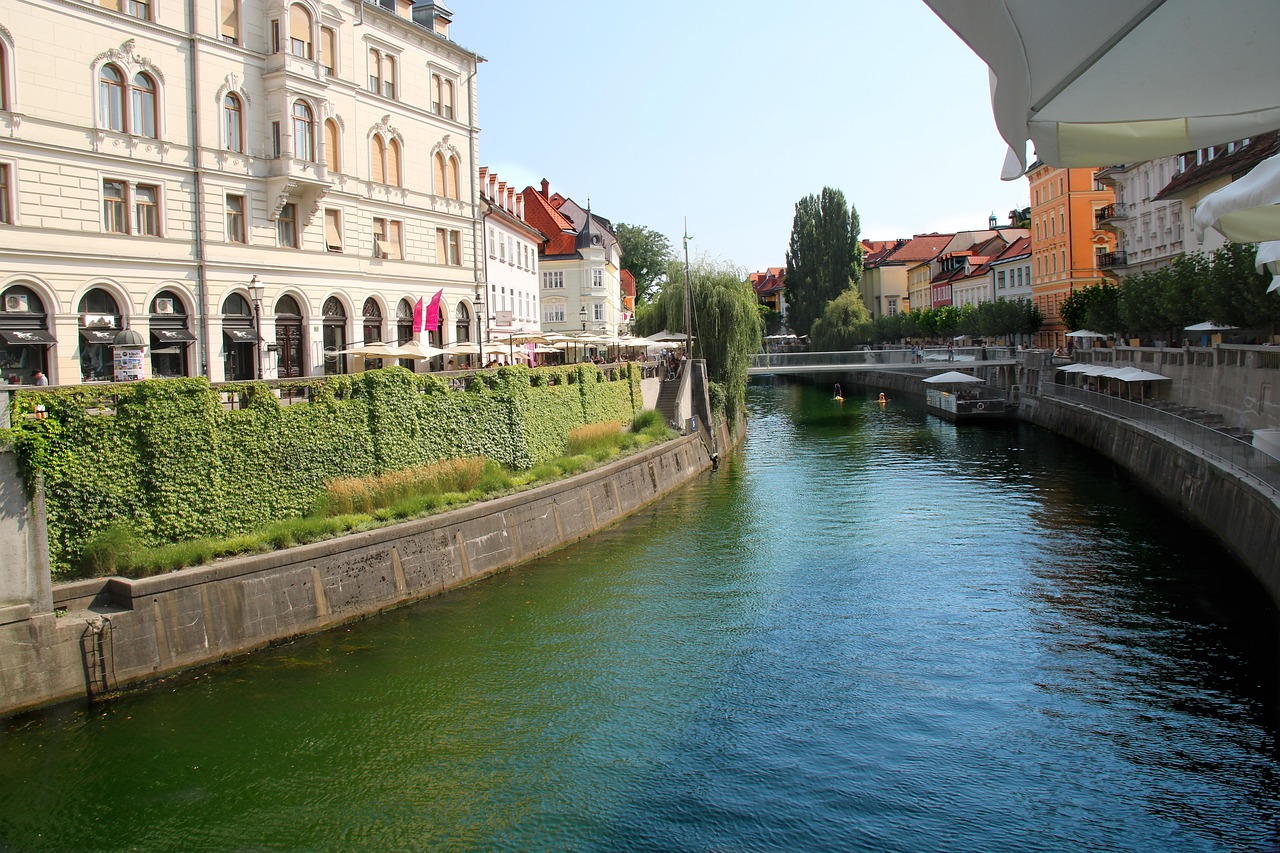
Morning light breaks through the mist over the Ljubljanica, the river that winds like a green ribbon through central Ljubljana. Along the embankments, where Baroque and Art Nouveau façades are reflected in the water, there is no roar of engines. Instead, there is the faint whir of bicycle chains, the scrape of café chairs being pulled out onto the cobbles and the murmur of commuters stopping for a quick espresso in the morning sun.
The fact that Ljubljana is now seen as one of Europe’s most harmonious and vibrant capitals is no coincidence. It is the result of a radical and deliberate decision made fifteen years ago: to put people before cars, entirely. Nordic visitors will find the widespread cycling culture familiar, but here it has blended with a relaxed, southern European way of life to create something quite unique.
From traffic chaos to the city’s green living room
To understand how far the city has come, we need to look back to the time before its great transformation. During the 1990s and early 2000s, Ljubljana, like many other cities in the region, was badly affected by traffic. Historic squares served as car parks, and heavy traffic cut straight through neighbourhoods. The beautiful bridges and monumental buildings of the celebrated architect Jože Plečnik were hidden behind a curtain of exhaust fumes and metal boxes.
The turning point came in 2007, when the city adopted the strategic document “Vision of Ljubljana 2025”. The plan was simple but provocative for its time: the city centre would be made entirely car-free. The work began by closing the elegant Wolfova ulica (Wolfova Street) and the central Prešeren Square (Prešernov trg). A few years later, in 2011, Congress Square (Kongresni trg) followed suit: a vast open space that had previously been filled with parked cars was transformed into a leafy park, with an underground car park hidden beneath it.
The most symbolic step, however, came in 2015 with the transformation of Slovenska cesta. The street was the city’s main traffic artery, a noisy four-lane route cutting straight through the city from north to south. As recently as 2013, it had no cycle lanes at all. Today, the street is closed to private cars and has become what local people call “Ljubljana’s living room”. It is now what is known as a shared space, where cyclists, pedestrians and city buses move on equal terms in the shade of newly planted ash trees.
The results of these changes are striking. Within the now 17-hectare car-free zone, carbon emissions have fallen by up to 70 per cent, and noise levels have dropped by six decibels. What was initially met with scepticism by local business owners now enjoys overwhelming support: 95 per cent of the city’s residents see the transformation as positive.
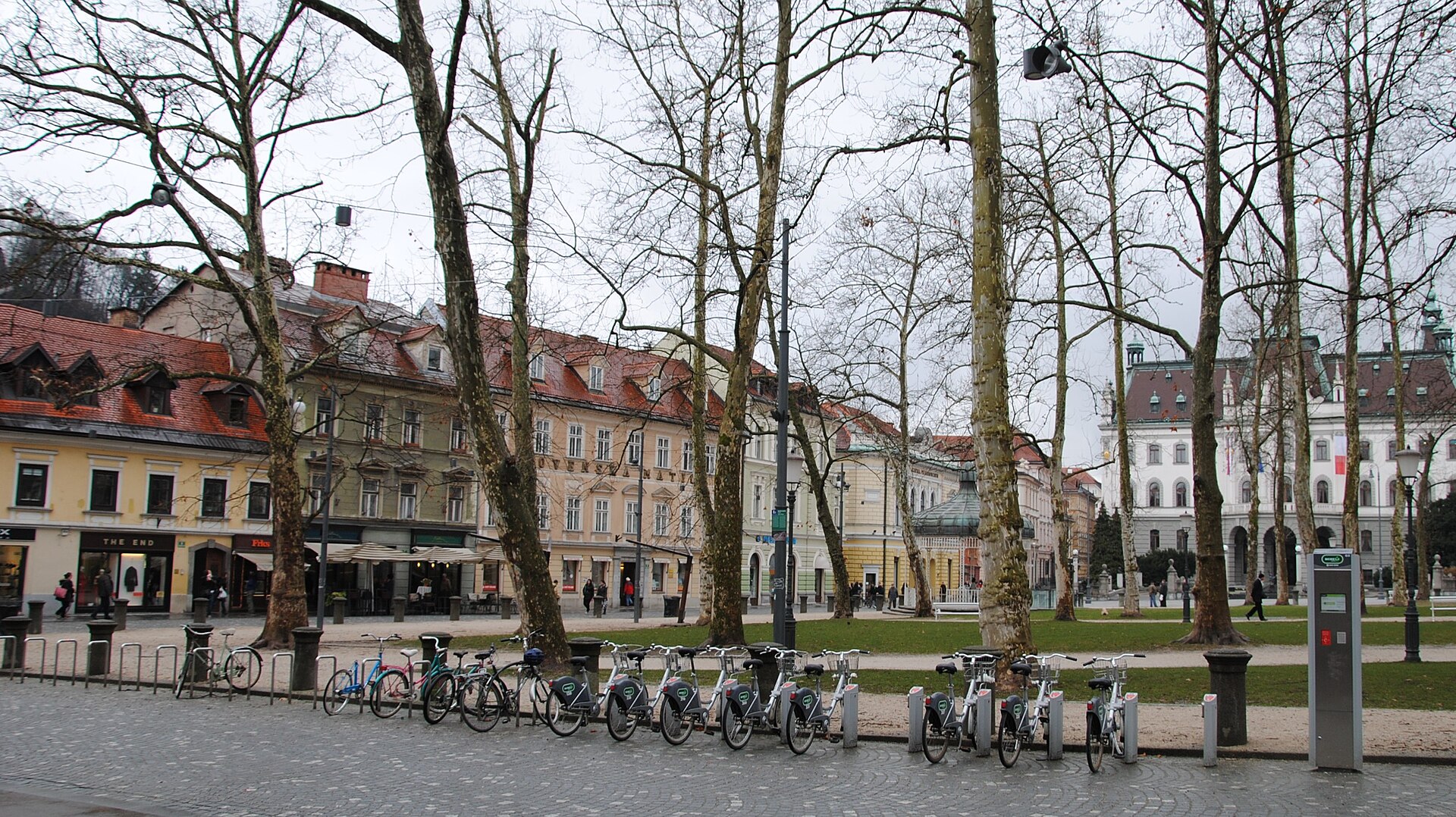
BicikeLJ and the popular cycling boom
Building car-free streets is one thing, but getting an entire population to change its means of transport requires accessibility. The key to making cycling a normal part of everyday life was the introduction of the BicikeLJ bike-sharing system in 2011.
What began on a modest scale, with 300 bicycles, has grown into one of Europe’s most successful bike-sharing schemes. Today, there are more than 830 bicycles at 83 stations around the city. The system’s popularity is down to its simplicity and pricing: the first hour is always free, which means almost every trip made using the system costs users nothing. BicikeLJ has become a natural extension of public transport and is widely used by everyone from students on their way to university to suit-wearing office workers and pensioners heading to the market.
The Slovenian way of life has always been closely associated with nature and outdoor activities: at weekends, city residents often head to the mountains to hike or cycle. Through the city’s transformation, this active lifestyle has become part of everyday life. Cycling to work is no longer a project that requires special sportswear, but a natural part of urban life.
The Nordic perspective and the Copenhagenize Index
Anyone used to the cycle lanes of Copenhagen or Stockholm will soon find much that feels familiar in Ljubljana. For several years, the city has ranked highly in the prestigious Copenhagenize Index, which ranks the world’s most cycle-friendly cities.
What sets Ljubljana apart from the flat, sprawling Nordic cycling cities, however, is its compact geography and the southern European character of its public spaces. With 280,000 inhabitants, Ljubljana is a relatively small capital, which means that most distances are short. But the city has shown that you do not need to be a megacity to deliver large-scale green infrastructure.
In the Nordic countries, the bicycle is often seen as a strictly practical and efficient commuting tool. In Ljubljana, it is just as much a way to socialise. Cycle lanes do not just lead to workplaces; they flow seamlessly into the city’s rich café culture. It is this combination of northern European structure and Mediterranean atmosphere that makes cycling in Slovenia so appealing.
Infrastructure for the future
To accommodate the ever-growing number of cyclists, the city continues to expand its network, which now stretches for more than 300 kilometres. But it is the smart details that make the biggest difference in everyday life.
Among other measures, the city has opened up 123 one-way streets to two-way cycle traffic and introduced so-called “sharrows” – marked lanes where cars must adjust their speed to cyclists on narrower streets. To address the problem of bicycle parking, thousands of new bike racks have been installed in recent years, and there are plans to build a large underground bicycle garage next to the central station to make combined train and bus journeys easier.
As the sun begins to set over Ljubljana, the streets fill with cyclists once more. They are on their way home from the office, heading to an outdoor concert in Tivoli Park, or simply cycling to the nearest terrace to meet friends over a glass of local white wine. The Slovenian capital has shown that a modern city is not built around the needs of the car, but around the needs of people. And the best way to experience this transformation is undoubtedly from the saddle of a bicycle.
Facts
Ljubljana’s green transformation
- Car-free zone: The city’s car-free centre now covers around 17 hectares.
- Cycle network: Ljubljana has more than 300 kilometres of connected cycle routes.
- BicikeLJ: The bike-sharing system has more than 830 bicycles and 83 stations. The first 60 minutes are always free.
- Environmental impact: Carbon emissions in the car-free zone have fallen by 70% since the project began.
- Copenhagenize Index: Ljubljana has repeatedly been ranked among the world’s 20 most cycle-friendly cities.
Sources & further reading
- ecf.comHow the bicycle transformed Ljubljana into a more liveable ...
- momentummag.comThe World's Best Cycling Cities Right Now
- epicroadrides.comGuide to cycling in Ljubljana, Slovenia - Epic Road Rides
- velo-city-conference.comBike-driven transformation: Ljubljana's urban makeover
Share the article
Translated from Swedish with AI assistance. Read the original.


