
Oplenac – royal tombs, mosaics and a day trip from Belgrade
On a wooded hill above Topola rises Saint George's Church in white marble. Behind the harmonious facade await 40 million mosaic pieces, royal tombs, an upside-down crown and the story of a dynasty that shaped modern Serbia. Just about 80 kilometres from Belgrade, Oplenac is at once a piece of history and one of Šumadija's most interesting day trips.
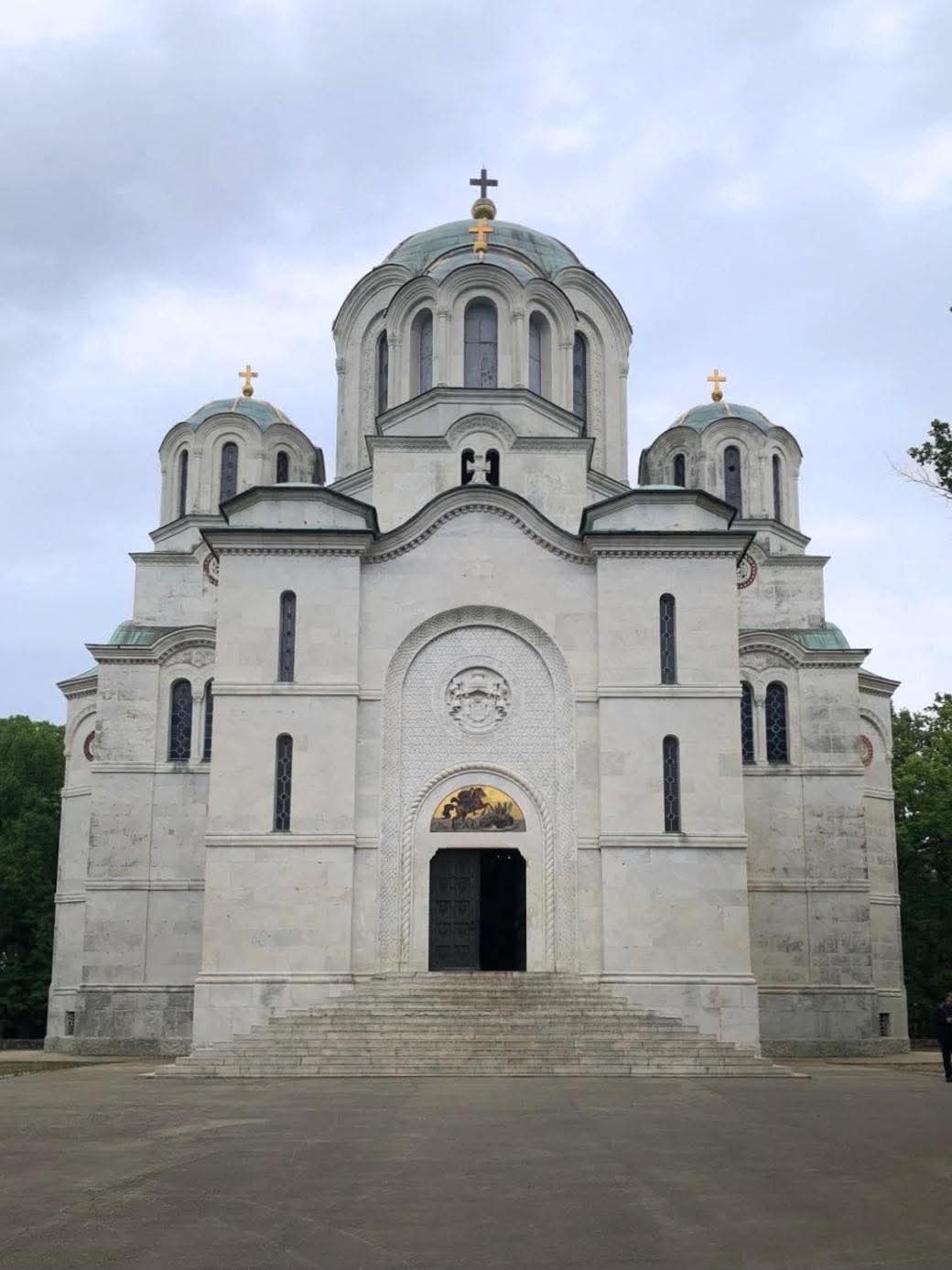
The first thing you notice is the stillness.
Oplenac is located on a hill above Topola in Šumadija. The road up goes through lush greenery before the white Church of Saint George appears between the trees.
From a distance, the building looks almost austere.
White stone. Five domes. Clear geometric shapes.
But inside the doors, everything changes.
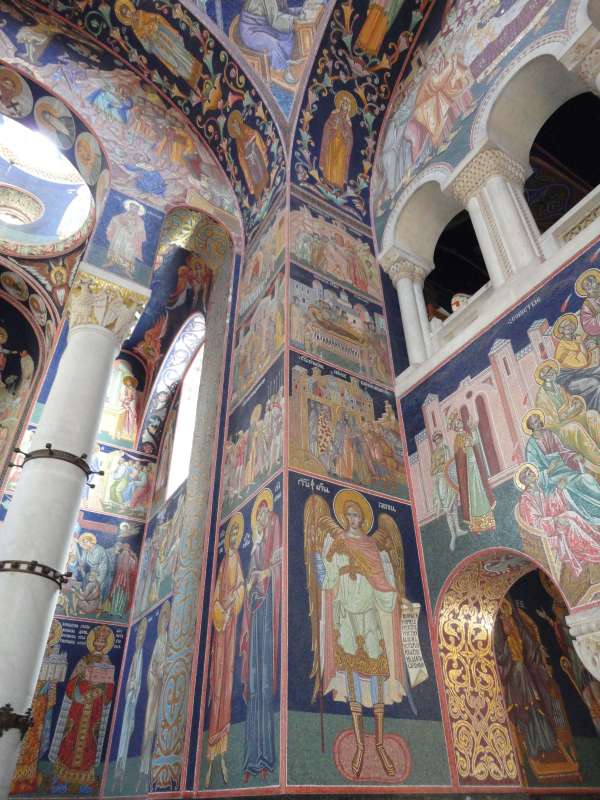
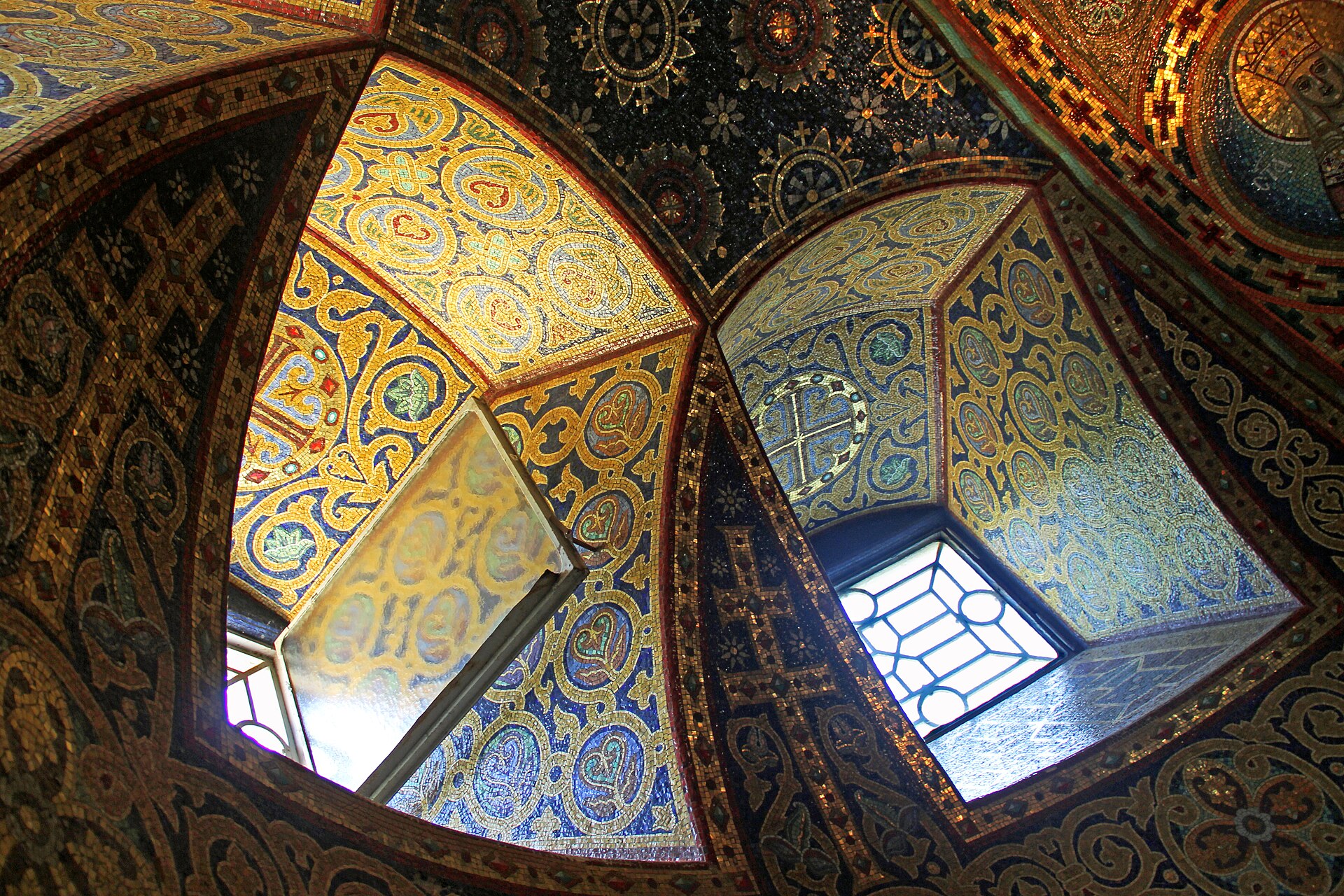
Walls, vaults and domes explode with colour and gold. Millions of tiny glass pieces form saints, biblical scenes and motifs drawn from centuries of Serbian medieval art.
And beneath the church lies a completely different world.
Here rest generations of the Karađorđević dynasty.
Oplenac is therefore not just a church.
It is a mausoleum, artwork, historical archive and royal memorial all in one place.
Where the history of modern Serbia began
Topola is closely linked to Karađorđe Petrović and the First Serbian Uprising against the Ottoman Empire in 1804.
Karađorđe made the area an important political and military centre.
Almost a hundred years later, his grandson, King Peter I Karađorđević, returned to the same place with a different ambition.
When Peter I ascended the throne in 1903, he wanted to create a church and family tomb at Oplenac.
The site was to unite the history of the dynasty with the rise of the modern Serbian state.
The construction of Saint George's Church began in 1910, based on designs by architect Kosta J. Jovanović.
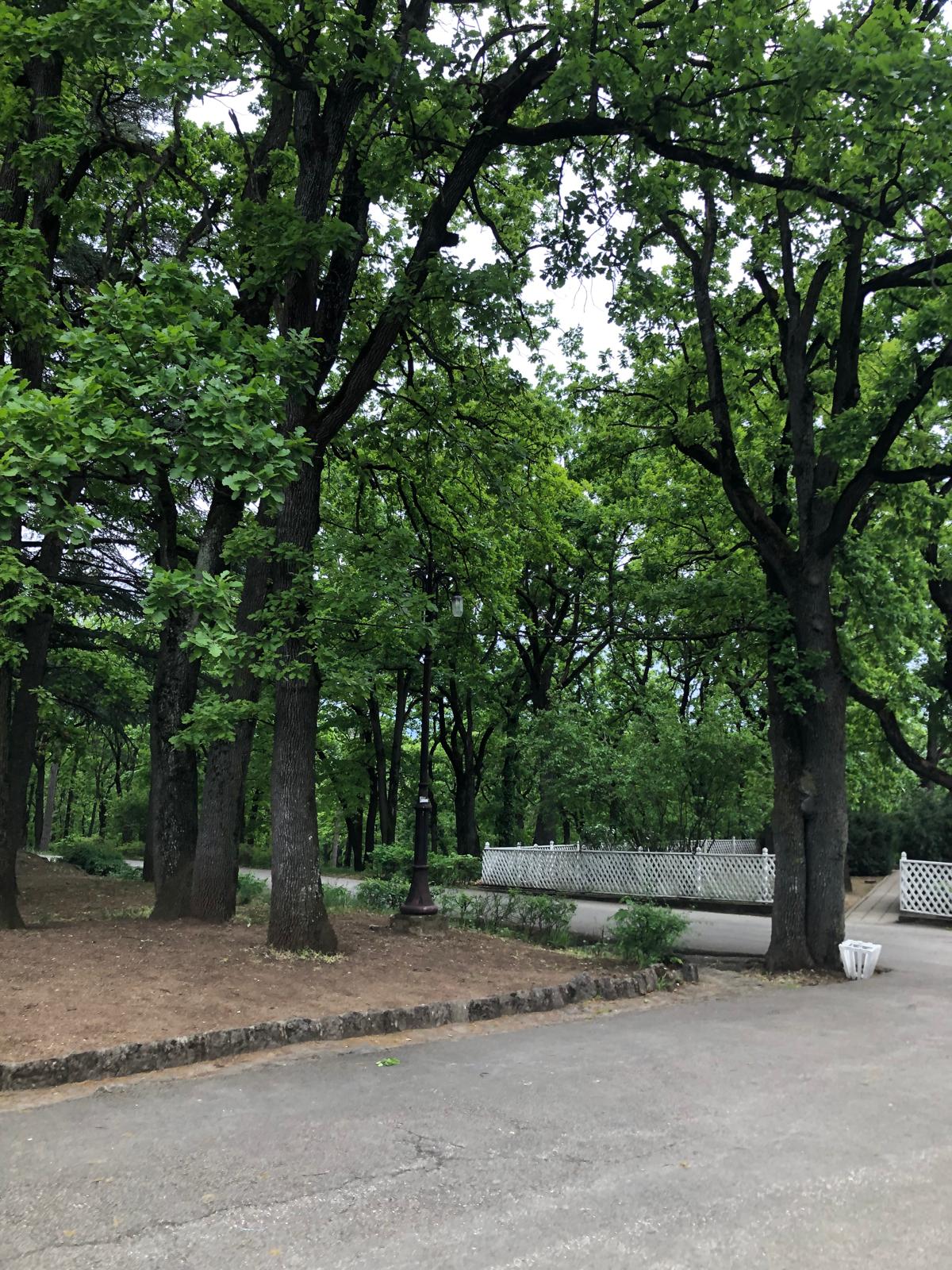
Where does the name Oplenac come from?
The name of the hill itself also carries local history.
It is usually explained by the word oplen – a part of the traditional wooden frame of horse-drawn wagons.
The wood was sourced from the oak trees growing on the hill.
Over time, Oplenac became the name of the place itself.
To this day, the area is characterised by forests and green slopes, making the contrast with the church's white marble even more striking.
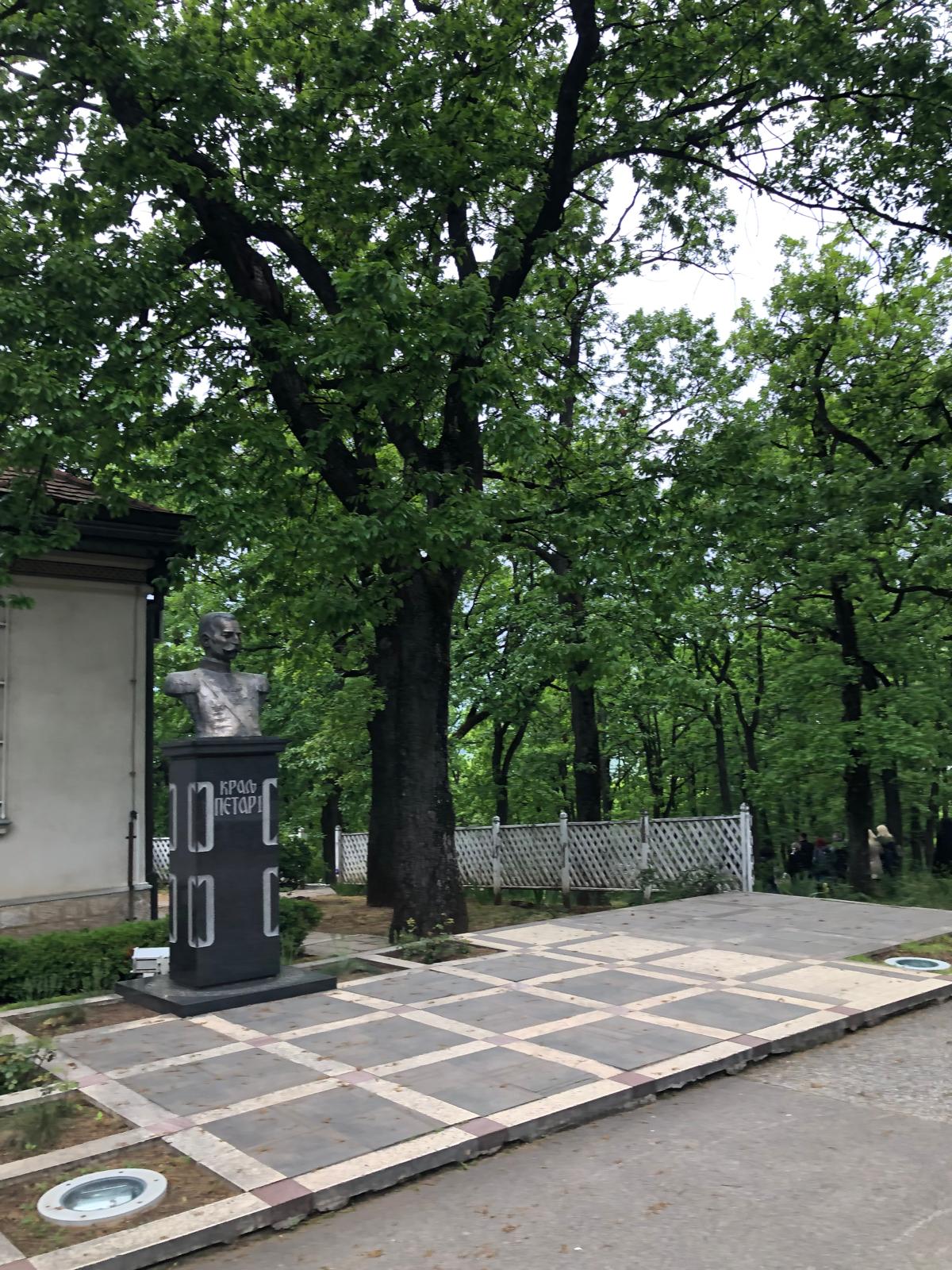
The King moved to the construction site
Next to the church is a much simpler house.
It was originally built to manage the work on the church, but King Peter I used it himself while construction was underway.
He followed the project closely and lived in the house periodically until the First World War.
Today, the building is known as King Peter's House and is part of the visit to Oplenac.
There is something telling about the contrast.
A few metres away, a monumental royal church was being erected.
The king himself lived in a relatively modest house next to the construction site.
A church that could not be built in peace
By 1912, the church building itself was well advanced.
But then came the Balkan Wars.
Followed by the First World War.
When Serbia was occupied in 1915, Oplenac suffered extensive damage and looting. Copper from the roof and domes disappeared, church bells were taken, and parts of the interior and crypt were damaged.
The building that was to become the dynasty's great monument stood unfinished once again.
King Peter I survived the war but was by then old and ill.
He never lived to see his foundation completed.
When he died in 1921, he was buried at Oplenac.
His son, King Alexander I, took over the work.
The son changed his father's vision
Under King Alexander I, the church acquired much of the character that visitors encounter today.
The Russian-born architect Nikolaj Krasnov, who had left Russia after the revolution and later worked in Belgrade, played an important role in designing the interior.
But the biggest change was on the walls.
Instead of a more traditional decoration, an enormous mosaic programme was created to gather motifs from Serbian medieval church art in a single place.
Artists studied frescoes in a large number of historical churches and monasteries.
The motifs were then transferred to mosaic.
The result was something that is hardly hinted at by the relatively quiet facade outside.
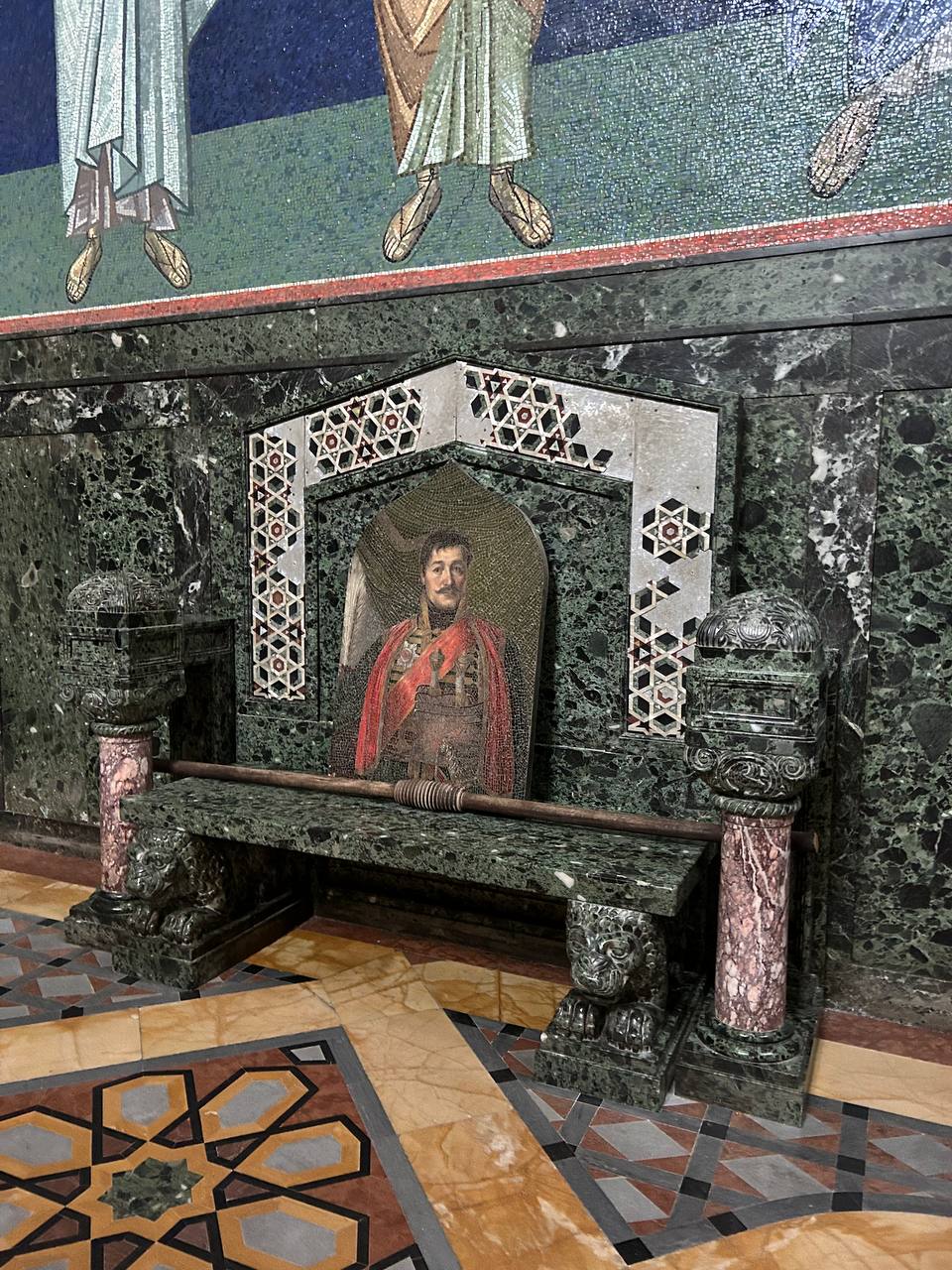
Forty million mosaic pieces
Oplenac's interior comprises around 3,500 square metres of mosaic.
This involves approximately 40 million individual glass pieces in around 15,000 different shades of colour.
Hundreds of composition fields and around 1,500 figures cover the walls, vaults and domes.
The motifs are based on art from around 60 Serbian medieval churches and monasteries.
This means that Oplenac works almost as a visual archive of several centuries of sacred art.
In just a few minutes, visitors can encounter motifs whose originals are scattered across a vast geographical area.
The difference is that here, they are not frescoes.
They are mosaic.
And when daylight hits the glass, the colours change depending on where you stand.
Look up – the crown hangs upside down
Directly under the main dome hangs one of the church's most unusual objects.
A monumental bronze polycandelon.
It is around nine metres in diameter and weighs approximately 1,500 kilograms.
But the most interesting thing is not its size.
It is its shape.
The chandelier is shaped like a medieval royal crown – turned upside down.
The symbolism is associated with mourning for the fall of the medieval Serbian empire after the Battle of Kosovo in 1389.
From the side, the shape is not always obvious.
It is only when you stand directly beneath it and look up that the crown reveals itself.
A detail that tricks the eye
Oplenac's mosaics are designed to be viewed from a long distance.
This means that the proportions high up in the domes and vaults must be adapted to the perspective from the church floor.
A detail often highlighted during guided tours of Oplenac is the monumental figure of Christ high above the visitor.
From the floor, the proportions look natural.
At close range, however, the dimensions are enormous – according to a frequently cited detail, the index finger of the Christ figure is about 1.2 metres long.
This is an example of how the artists worked with perspective to ensure the image was perceived correctly from ground level.
Beneath the church rests the dynasty
From the bright and golden church, the path leads down into the crypt.
The atmosphere changes immediately.
Oplenac is the mausoleum of the Karađorđević family and houses tombs from six generations of the dynasty.
Karađorđe and King Peter I have their tombs in the church itself.
In the crypt are a large number of other family members.
Among them is King Alexander I, who continued his father's work with Oplenac.
Here, the function of the site becomes particularly clear.
Above is the story of faith, art and national history.
Beneath the floor are the people whose names are bound to it.
A masterpiece of mother-of-pearl
In King Peter's House, there is also an object that is often overshadowed by the church's spectacular mosaics.
A relief of The Last Supper, crafted in mother-of-pearl.
The motif is based on Leonardo da Vinci's famous composition, and the craftsmanship is associated with artisans from Bethlehem.
The piece came into the possession of the royal family during the interwar period.
There is also a dramatic story surrounding its fate during the Second World War.
Hermann Göring had seen the work at Oplenac before the war, and according to the story told about the object, it was later removed during the German occupation and ended up in Germany before being returned after the war.
Today, it can once again be seen at Oplenac.
It is both an art object and a reminder of Europe's turbulent 20th century.
Royal wine beneath the hills of Šumadija
Oplenac is not just about the church and the tombs of the dynasty.
The area around Topola has a long tradition of viticulture.
King Peter I developed grape growing on his lands, and under King Alexander I, the operation expanded further.
The royal wine cellar became an important part of the estate.
Today, historical bottles from the Karađorđević era still remain there, including archive wines from the early 1930s with the royal seal on the bottles.
This is a completely different side of the royal history.
Not ceremonies and monuments.
But agriculture, grapevines and the terroir of Šumadija.
A king with a notebook at the construction site
In King Peter's House, the memory of everyday life surrounding the construction is also preserved.
Peter I followed the work meticulously and kept notes on what happened at Oplenac, the people who visited, and life surrounding the project.
This makes the little house an interesting contrast to the grand church.
Here, history comes much closer.
Oplenac was not just a royal monument planned on paper.
For several years, the site was an active construction site where the king himself was right in the thick of the work.
History continued after the kings
The history of Oplenac did not end when the church was completed.
The Kingdom of Yugoslavia vanished.
The Second World War changed the country.
The monarchy was abolished.
Socialist Yugoslavia was created and would later itself dissolve.
Meanwhile, the church remained standing on the hill above Topola.
It is therefore difficult to view Oplenac simply as a religious monument.
The site has accompanied a whole century of Balkan history.
Five details not to miss at Oplenac
The upside-down crown Stand directly beneath the large chandelier and look up. Only then does the crown shape appear clearly.
The proportions of the mosaics The figures high above you are significantly larger than they appear from the floor. The perspective is designed to trick the eye.
The mother-of-pearl relief Do not miss The Last Supper in King Peter's House. It is easy to overlook when the church gets all the attention.
The crypt Do not just enter the main church. The crypt is a central part of the story of the Karađorđević dynasty.
The royal winery If time permits, the wine cellar is worth a stop in its own right. It tells a completely different story of the royal family's life at Oplenac.
Make Oplenac a day trip from Belgrade
Oplenac is located about 80 kilometres south of Belgrade and therefore works well as a day trip.
But do not make the mistake of just driving there, looking at the church and going back.
Topola and Šumadija deserve a few more hours.
A good day can start with Topola's historical settings and Karađorđe's konak (traditional residence) before continuing up towards Oplenac.
There you can see Saint George's Church, the crypt and King Peter's House, and then continue to the royal winery.
Lunch can happily be made a part of the journey.
Šumadija is known for both traditional food and wine production, and the landscape around Topola is a big part of the experience.
This makes Oplenac something more than just a museum visit.
It becomes a journey through history, nature, architecture, food and wine – within comfortable reach of Belgrade.
Share the article
Translated from Swedish with AI assistance. Read the original.


