
Honey Vibrations in the Alps: How Slovenia's Beekeeping Became Luxury Wellness
A warm, spicy scent of beeswax, propolis and forest honey fills the small wooden house at the foot of the Alps. Outside, thousands of industrious Carniolan honeybees buzz, but inside, an almost sacred calm prevails. Welcome to Slovenia, where a centuries-old beekeeping tradition has been transformed into one of Europe's most unique and sophisticated wellness trends: apitourism.
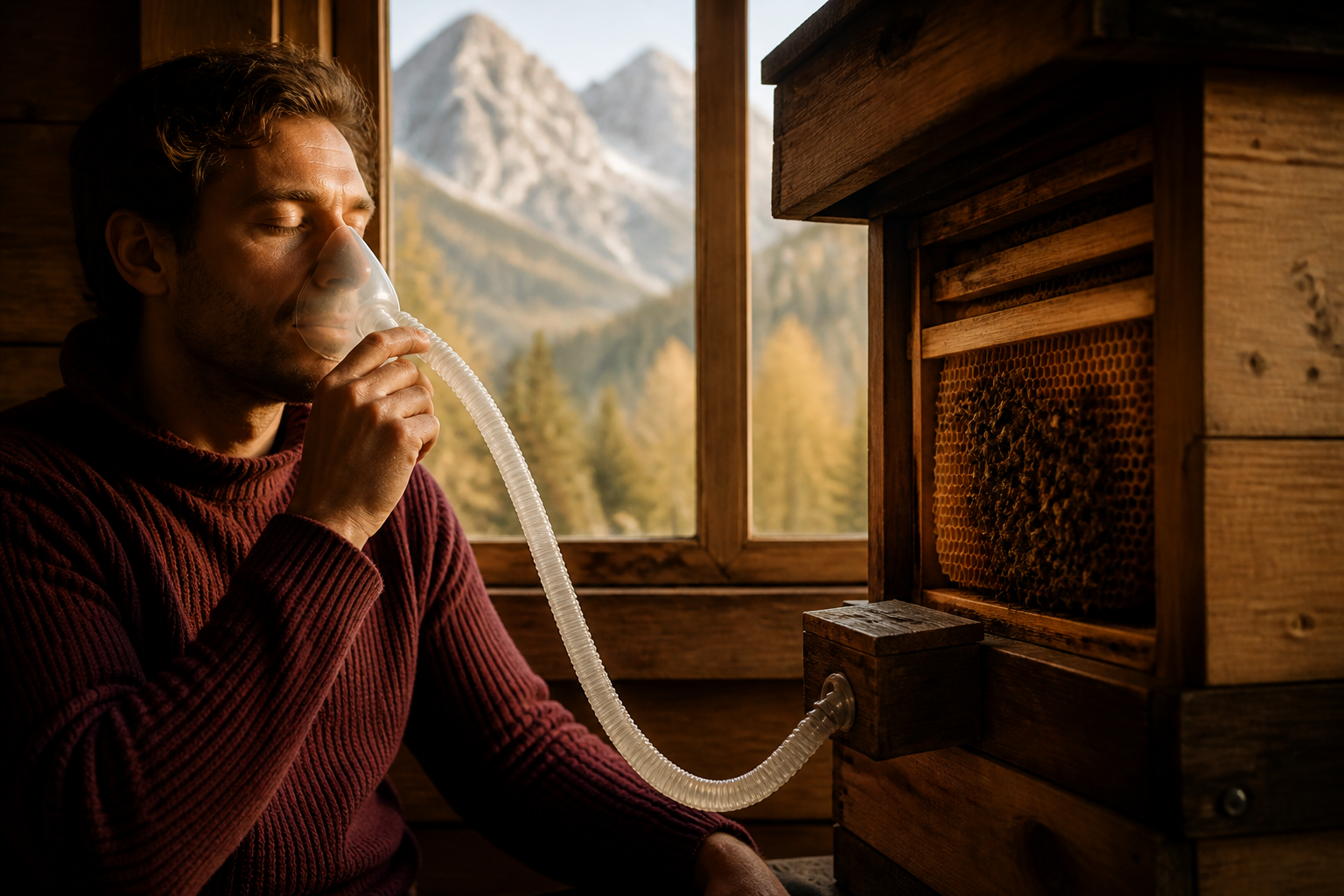
The first thing that strikes you when you cross the threshold of a traditional Slovenian beehouse, a so-called čebelnjak, is not the sight of the bees. It is the air. It is dense, warm and saturated with an almost sacred scent of sweet wax, resinous propolis and the volatile aromas of dried nectar. Then comes the sound. A low, steady hum that does not sound like an individual insect, but rather like a living, pulsating organism.
In Slovenia, this phenomenon – which for generations has been part of the country's folk medicine – has been elevated to a point of national pride and an award-winning global wellness trend. The concept is called apitourism (after the Latin word for bee, apis), and the country is today a world leader in combining beekeeping with modern luxury wellness. For stressed visitors, accustomed to minimalist spas and digital detoxes, the Slovenian interior offers a completely new way to find peace. Here, it is about slowing down, listening to micro-vibrations and letting nature's smallest workers dictate the pace.
A Symphony in 600 Hertz – Meditation That Breathes the Beehouse
The foundation of Slovenian apitherapy is simple yet deeply physiological. Many beehouses in the country are equipped with special therapy beds built directly on top of the beehives. Guests lie comfortably on the wooden beds, separated from the bees by a fine-mesh screen, while the vibrations of the hives propagate through the wood. Bees vibrate at a frequency of around 150 to 250 hertz, but when an entire hive works together, they create a resonance that is often closer to 600 hertz. For the human nervous system, this constant, low-frequency humming acts as an instant stress reducer.
At the same time, guests breathe in the air from the hives through special masks connected to a filter system, or simply by being in the room. This aerosol therapy is rich in essential oils, propolis, wax particles and pollen. It is said to clear the airways, relieve asthma and boost the immune system. But above all, it is about the mental effect. Lying in a warm wooden house in the middle of the Slovenian countryside, meditating to the sound of sixty thousand bees, is a sensory experience far removed from the sterile rooms of classic spa treatments.
The Empress's Chosen and the Gentle Carniolan Bee
To understand why Slovenia of all places has become the global epicentre of apitourism, one must look back. The Slovenian relationship with the bee is not a modern marketing gimmick; it is part of the country's DNA. As early as the 18th century, the foundation of modern beekeeping was laid here by Anton Janša (1734–1773). Born into a poor peasant family in Breznica, he showed an exceptional talent for understanding the behaviour of bees. His reputation reached all the way to the court in Vienna, where Empress Maria Theresa appointed him as the very first teacher of apiculture at the royal school. Janša revolutionised beekeeping by introducing stackable beehives and advocating for the migration of bees to different pastures.
It was also Janša who spread knowledge of the unique Slovenian Carniolan honeybee (Apis mellifera carnica), locally known as Kranjska sivka. This greyish sub-species is famous worldwide for its extremely gentle temperament, its industriousness and its ability to navigate a harsh Alpine climate. The fact that Slovenian beekeepers can keep their hives so close to residential buildings and therapy beds is entirely due to this bee's rare docility.
Slovenia was also the country that campaigned for the UN to establish the official World Bee Day, which is now celebrated globally on 20 May each year – on Anton Janša's birthday. This historical heritage is still visible in the landscape through the traditional, colourful beehive front panels (panjske končnice). These panels, which often depict humorous, biblical or historical scenes, originally served as landmarks to help the bees find their way back to the correct hive, but are today highly prized items of folk art.
From the Springs of Savinja to Honey-Scented Thermal Baths
The Slovenian interior is rich in thermal springs, and it is in the meeting between mineral-rich water and beekeeping that the modern luxury wellness trend has found its perfect form. Several of the country's leading spa resorts have developed sophisticated honey treatments that combine traditional medicine with modern skincare.
One of the best-known examples is Thermana Laško, beautifully situated along the Savinja River. Here, a complete portfolio of honey-based spa rituals has been created. The treatments exclusively use locally produced honey from the Savinja Valley. A signature treatment is the honey massage, where the therapist uses a special technique that creates a light vacuum against the skin. This deeply stimulates blood circulation, removes waste products and leaves the skin silky smooth thanks to the honey's natural moisturising and antibacterial properties. For those who want to go a step further, baths in milk and honey are offered under the iconic glass dome of the resort, a nod to historical beauty rituals but in a modern, architectural setting.
Other well-known thermal spas have also embraced the trend. Terme Olimia, famous for its award-winning, futuristic architecture, integrates apitherapy into its holistic health programmes. Here, guests can experience sauna rituals where the skin is rubbed with a mixture of honey and sea salt, facilitating sweating and deep cleansing. Similar specialised treatments can be found at Terme Paradiso and Terme Banovci, with each resort putting its local touch on the health-giving benefits of honey.
Waking in a Honeycomb – Modern Glamping in Beeland
For those who want to live in symbiosis with the world of bees throughout their stay, Slovenia has developed accommodation concepts that blur the line between nature and luxury design. In Mozirje, located in the scenic Savinja Valley, lies Medena vas (Beeland). This is a boutique glamping site where the cabins are shaped like giant, golden honeycombs.
The cabins are built entirely of natural materials and offer modern, thoughtfully designed accommodation with an architectural nod to the geometry of the beehive. Here, guests wake to the scent of wood and wax, and outside the door lies a carefully landscaped garden with plants specifically selected to provide nectar for the bees. Several cabins are equipped with a private sauna or outdoor pool, and breakfast is delivered in a wicker basket filled with Slovenian delicacies: honey bread, fresh cheese with honey, yoghurt sprinkled with pollen, and local herbal teas.
This accommodation concept is about more than just aesthetics. It is a portal to a deeper understanding of the ecosystem. Guests are often invited on guided tours with local beekeepers, where they can put on protective suits and look into the hives, taste fresh honey straight from the comb, and learn about the vital role bees play in biodiversity.
Golden Certifications and Protected Forests
The fact that Slovenia has succeeded so well with its apitourism is largely due to systematic work by the Slovenian Beekeepers' Association and the tourist board. The country has introduced an official, state-run quality certification for apitourism providers. Facilities are thoroughly evaluated based on their knowledge, hygiene, environmental consideration and the quality of their treatments. Instead of traditional hotel stars, certified operators are awarded symbols of one, two or three bees – a guarantee that the guest receives an authentic and professional experience.
This pursuit of quality also extends to the products themselves. Slovenia has two regions with strictly protected honey varieties that bear the EU's Protected Designation of Origin (PDO). In the south, in the deep and pristine forests around Kočevje, Kočevski gozdni med (forest honey from Kočevje) is produced. It is a dark, mineral-rich honey that bees gather from spruce, fir and oak, known for its deep, almost smoky flavour. Further west, on the windswept limestone plateau towards the Italian border, Kraški med (Karst honey) is produced. This honey is extremely aromatic because the Karst region's barren flora is rich in wild herbs, sage and thyme.
When sitting on the terrace of a beehouse in the Savinja Valley with a cup of local herbal tea sweetened with forest honey, it becomes obvious that Slovenia's wellness success is not about having invented something new. Rather, it is about having had the clarity of vision to nurture and refine what has always been there. In a world spinning ever faster, this small country by the Alps offers a luxury that does not glitter, but hums with pure, unadulterated life.
Facts
Slovenian Honey Specialities
- Kočevski gozdni med (forest honey from Kočevje): A dark, mineral-rich and resin-aromatic honey with hints of spruce and oak. Protected by the EU.
- Kraški med (Karst honey): Extremely aromatic honey from the Karst plateau's wild herbs, such as sage and thyme.
- Medeni liker (honey liqueur): A traditional Slovenian drink that is often served as a welcome drink at apitourism farms.
- Kranjska sivka (Carniolan honeybee): The native Slovenian honeybee strain, known for its extremely gentle temperament.
Sources & further reading
- slovenia.infoTop medene masaže in apiterapije v Sloveniji - Slovenia.info
- slovenia.infoTop honey massages and apitherapy in Slovenia
- exposlovenia.euSpa in apiturizem - Slovenija na Expo 2025 Osaka
- mywanderlustylife.comApitourism in Slovenia: 17 Awesome Bee Experiences You Have to Try
Share the article
Translated from Swedish with AI assistance. Read the original.


