
Graviera Naxou lets cow's milk take centre stage
Greek cheese is more than feta, sheep's milk and goat's milk. In Graviera Naxou, cow's milk takes centre stage. This PDO-protected hard cheese from Naxos is equally at home on a cheese board or beneath a golden, grilled crust – but the milk blend and ageing make all the difference.
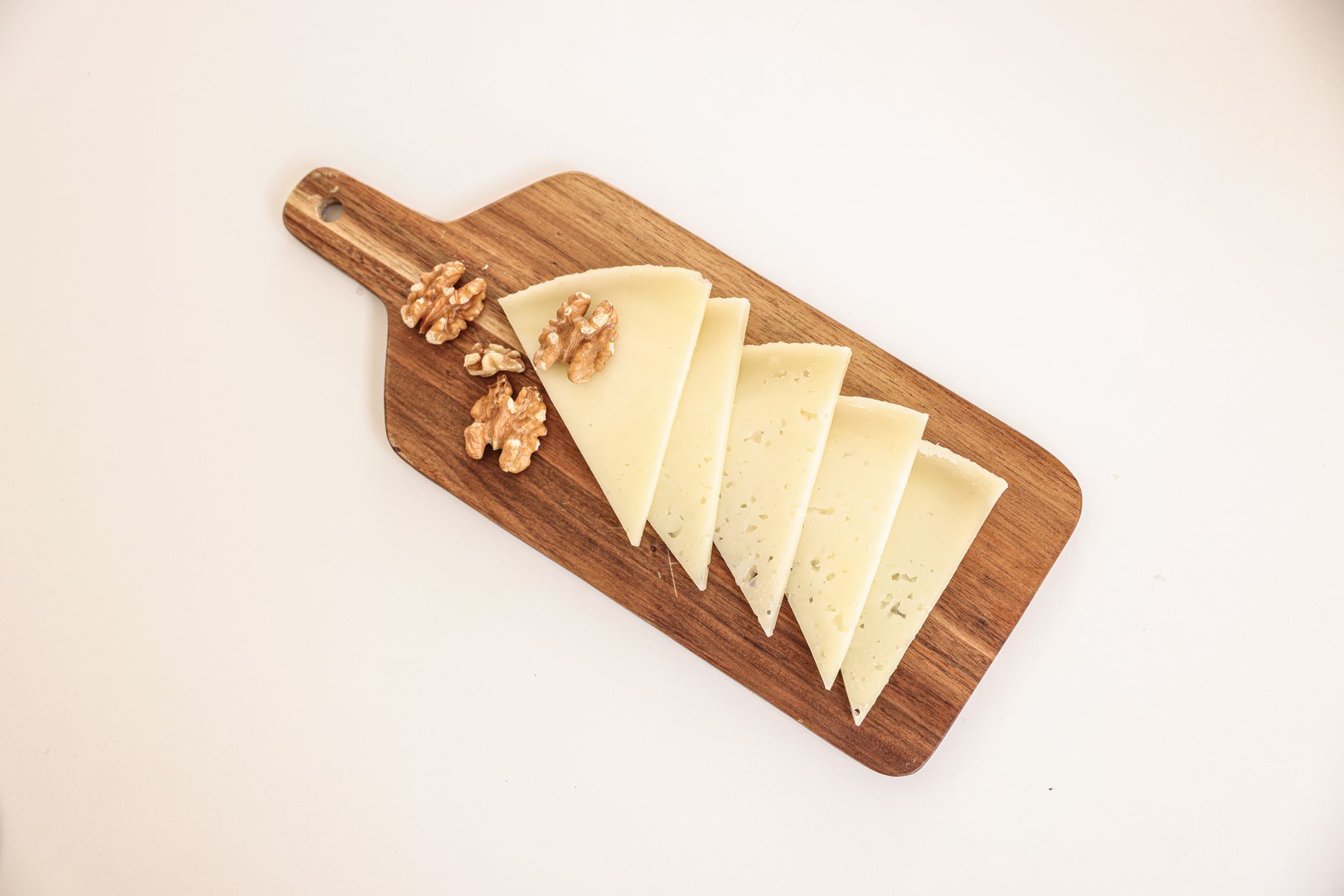
Slice a piece of Graviera Naxou before you reach for the grater. This pale yellow cheese, with its firm paste and small eyes, deserves to be tasted on its own. It offers a milky sweetness and a nuttiness that make it highly approachable without being bland. The saltiness provides structure, but it shouldn't dominate the experience.
This is a different entry point to Greek cheese compared to the white, tangy feta. Graviera Naxou is a hard cheese, meant to be placed on the table and enjoyed in chunks. The fact that it also works in a frying pan or over a baked dish is an extension of its story, not its sole purpose.
Cow's milk is the foundation, not an exception
Graviera is a name found in several parts of Greece. The milk used and the character of the cheese vary from place to place, which is precisely why the addition of 'Naxou' is important. It points to Naxos and a cheese where cow's milk plays the leading role.
Graviera Naxou can be made solely from cow's milk or from a blend containing at least 80 per cent cow's milk and a maximum of 20 per cent sheep's or goat's milk. Thus, a pure cow's milk cheese and a blended cheese are not two different quality classes. They are different expressions of the same denomination.
The island's agricultural cooperative, EAS Naxos, is one of the producers of Graviera Naxou. This does not mean that every producer on the island uses the same milk blend. Anyone wishing to know what a particular piece contains must check the label of that specific cheese.
The cow's milk provides a foundation where buttery, milky and mildly sweet tones can flourish. Adding sheep's or goat's milk can leave a different mark in terms of richness and aroma, but the percentage is not a complete description of the flavour. Cheesemaking, moisture content and maturation also affect the outcome. Two cheeses with the exact same milk blend do not necessarily taste identical.
For Naxos, the cheese is also a way of seeing the island as an agricultural landscape. Beyond the sandy coves lie farmland, livestock farming and dairies. Graviera Naxou belongs to that side of island life: a refined raw ingredient rather than a souvenir that merely happens to carry a place name.
Read the full name on the label
In Greek, the name is written Γραβιέρα Νάξου. The designation ΠΟΠ corresponds to PDO (Protected Designation of Origin) in English. This is the label to look for, alongside the full name of the cheese.
The PDO protection concerns the link between the product, its geographical origin and the prescribed method of production. It is not a rating of taste and does not mean that every wheel of cheese will be identical. The producer's craftsmanship and the ageing of the cheese continue to play a role within this shared framework.
A label that simply says 'graviera' therefore does not tell you that the cheese comes from Naxos. Other graviera cheeses have their own characteristics, and a cheese from Crete, for example, should not be seen as just another package of the same product. For those wishing to get to know Graviera Naxou specifically, the full designation is more important than a generic Greek image on the wrapper.
Nor should Arseniko be confused with Graviera Naxou. Arseniko is another cheese from Naxos, with a tradition centred on sheep's and goat's milk. The fact that two cheeses share the same island home does not make them interchangeable. On the contrary, they demonstrate how much variation can be found within local cheesemaking traditions.
Brine, shelves and time
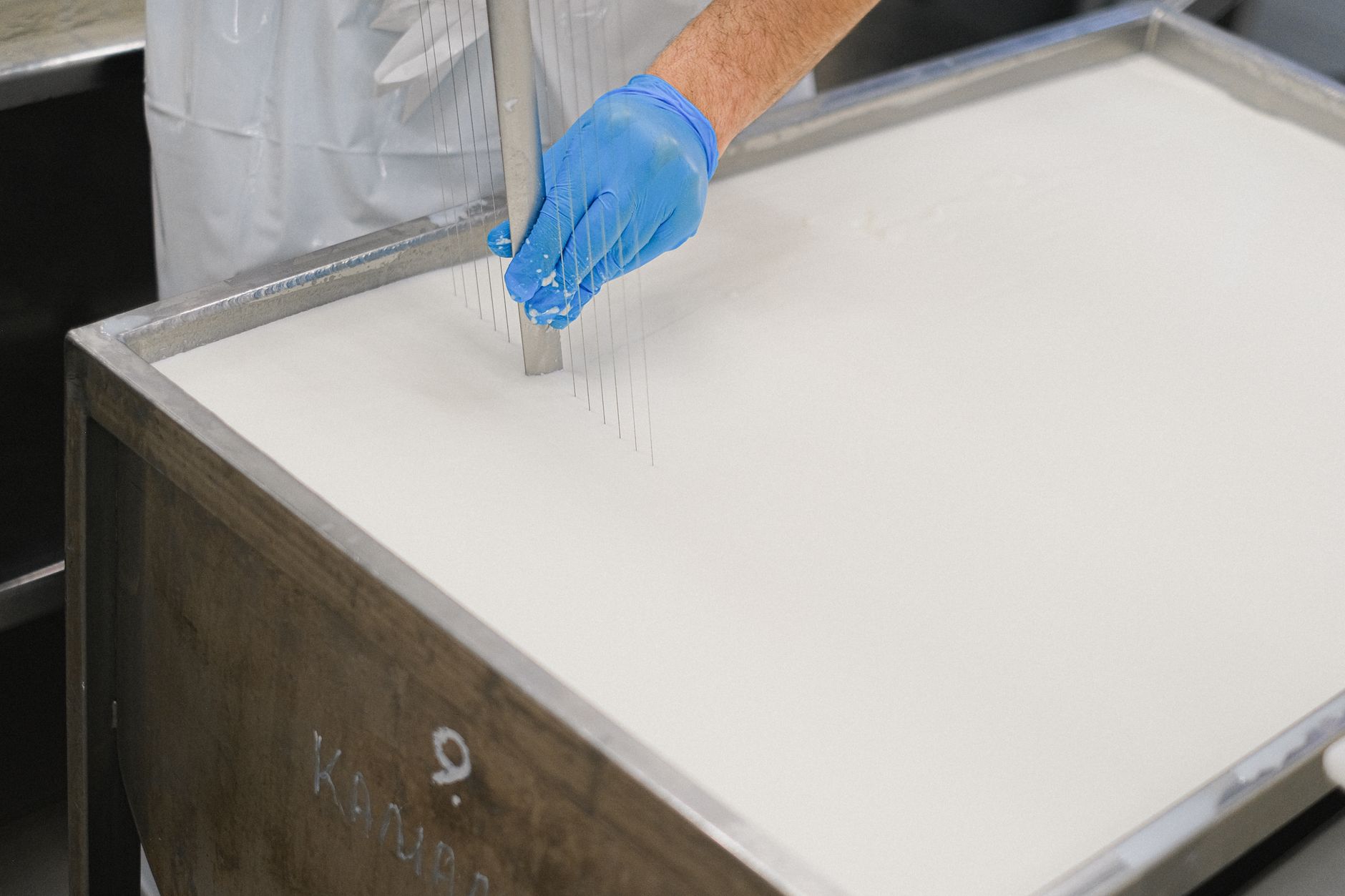
The path to a hard cheese begins with the coagulation of the milk and the separation of the curds from the whey. The curds are worked, gathered into moulds and given their cohesive structure. How much liquid drains from the curd affects the firmness of the finished cheese and how it develops during ageing.
At EAS Naxos, the process includes brining and maturation on wooden shelves. These are two distinct steps with different functions. The salt contributes to the flavour and influences the cheese's environment during maturation. Ageing then allows time for the texture and aroma to evolve.
Ageing does not automatically make a cheese better; it makes it different.
A younger hard cheese is often easier to slice and has a milkier character. With further maturation, the paste can become firmer and drier, while the flavour gains greater depth. Nutty and more savoury, broth-like notes may become more pronounced. This is a development to look out for when tasting, not a guarantee of how every aged Graviera Naxou will taste.
The saltiness also requires some consideration. A drier cheese can taste saltier as the flavours concentrate, but longer ageing does not in itself mean that more salt has been added. Describing a cheese simply as 'strong' therefore tells us very little unless we also talk about texture, aroma and balance.
Start on the cheese board
We recommend serving Graviera Naxou without too many accompaniments the first time. Bread and a pear go a long way. Allow a piece straight from the fridge some time to warm up before serving, so that both the aroma and texture are easier to appreciate.
Thin slices or relatively generous chunks suit a softer, milkier variety. A firmer, more mature cheese can instead be broken into smaller nuggets. This makes the texture part of the experience: how the cheese yields, crumbles or lingers on the palate.
In a salad with rocket, figs and walnuts, an aged graviera has a clear role to play. The pepperiness of the rocket meets the richness of the cheese, the figs contribute sweetness, and the walnuts offer a contrasting crunch. Shave the cheese into thin shards rather than grating it finely. This ensures it remains a distinct ingredient, rather than just saltiness dissolving into the dressing.
Taste before you salt the salad. It is a simple piece of kitchen advice that becomes particularly useful when the cheese has had time to develop a more concentrated flavour.
From saganaki to pastitsio
Saganaki is not the name of a specific type of cheese. In culinary terms, it refers to preparation in a small pan. Graviera is one option, and Graviera Naxou can yield a fried cheese with a beautifully browned exterior and a softer centre.
Choose a solid slice rather than thin shavings. A lightly floured surface can help form a crust. Fry it so that the surface browns before the whole slice melts away, and serve immediately. Lemon provides acidity to balance the fat and salt. A very dry and crumbly piece, however, is less suited here than a cheese that still holds together flexibly.
In pastitsio, the Greek baked dish with pasta, minced meat sauce and béchamel, grated Graviera Naxou can contribute both flavour and a grilled crust. The cheese does not need to dominate the sauce; the point is to add depth to a dish where several mild and rich components meet.
The same approach works over cauliflower, courgette or potatoes. Grate the cheese evenly, distribute it over the dish and let the vegetables retain their own character. A more mature graviera often works well as a flavouring agent in smaller quantities, while a more pliable variety is better when you want a more cohesive blanket of melted cheese.
The choice between cheese board, grater and frying pan thus begins with the piece itself. Taste it, feel its firmness, and then decide how it should perform in your cooking. Graviera Naxou needs neither to be reduced to a mere grating cheese nor saved only for a formal cheese board. Its strength lies in its ability to transition between both.
Sources & further reading
- thecheeseatlas.comGraviera Naxou: The Greek Stunner From Naxos (Complete Guide)
- travel.grWOW: Graviera Naxou Named the World’s Best Cheese | Travel.gr/en
- easnaxos.comGraviera Naxou P.D.O. - EAS Naxos
- naxos.guideCheese – Naxos Guide
Share the article
Translated from Swedish with AI assistance. Read the original.


