
From diploma to profession: how Balkan degrees are assessed in Sweden
Bringing an academic degree from Bosnia, Serbia or North Macedonia to the Swedish labour market is the start of a complex journey. From dusty university archives back home to demanding Swedish knowledge tests, this is the bureaucratic reality for Balkan academics in Sweden.
Large brown envelopes filled with stamped documents in both Cyrillic and Latin script. Translations prepared by authorised translators in Belgrade, Sarajevo or Skopje, bound with braided ribbons in the colours of their countries and bearing heavy seals. For many highly educated people from the Balkans, the journey to the Swedish labour market begins long before their flight takes off for Arlanda or Landvetter. It is about turning years of academic hard work at established universities into a formal Swedish decision that gives them the right to work in their profession.
The route from diploma to Swedish professional registration or recognised professional status is rarely straightforward, however. Instead, it is lined with bureaucratic hurdles, language requirements and a sharp legal divide between the Balkan countries that have become EU members and those that remain outside the union.
The paperwork trail back home: from local authorities to Swedish applications
Applying to have a foreign qualification assessed in Sweden requires patience, attention to detail and often a fair amount of detective work back home. The process brings two different administrative worlds together. On the one hand is the Balkan region’s traditional preference for physical documents, stamps and official seals; on the other, Sweden’s digitalised but rules-based system.
It is not enough simply to show your degree certificate. Swedish assessment authorities require detailed records of completed courses (transcripts of records), and in many cases complete course descriptions setting out exactly what the studies involved, right down to the number of hours and specific reading lists. For someone who graduated in Banja Luka, Niš or Bitola ten or fifteen years ago, this may mean weeks spent searching university archives, where old, dusty files have to be retrieved manually by administrative staff who can sometimes be difficult to persuade.
Once the documents have been collected, the next challenge is translation. Applicants face strict requirements. The translation must be done by an authorised translator (known as a “sudski tumač” back home, or a translator authorised by the Legal, Financial and Administrative Services Agency in Sweden). All copies must also often be officially certified to verify their authenticity. To make the first step easier, the Swedish Council for Higher Education (UHR) offers digital services such as the Qualifications assessment tool. This assessment service gives a quick, indicative idea of what a foreign qualification may correspond to in the Swedish education system, but for regulated professions it is only the very first, introductory step.
The EU divide: automatic recognition versus individual assessment of third-country qualifications
The major structural divide appears at the European Union’s borders. Within the EU and EEA, a system of automatic recognition applies to a number of so-called harmonised professions, mainly including doctors, nurses, midwives, dentists, veterinarians, pharmacists and architects.
This means that a nurse from Croatia or a dentist from Slovenia has a significantly smoother and faster route into the Swedish labour market. Since their home countries are EU members, their qualifications already meet the minimum requirements for duration and content set out in the EU Professional Qualifications Directive. The assessment is therefore more of a formal administrative registration.
For someone with a degree from Serbia, Bosnia and Herzegovina, North Macedonia, Kosovo, Montenegro or Albania, the reality is quite different. In this context, these countries are classified as “third countries”. That means there are no general guarantees or automatic shortcuts. Each application is assessed individually and meticulously by the responsible Swedish authority. The duration and academic level of the qualification, as well as its specific clinical or theoretical content, are compared in detail with the equivalent Swedish qualification. Differences in the number of hours of practical training or theoretical study can quickly lead to rejection or a requirement to complete substantial additional training.
The hurdle of regulated professions: the processes at the National Board of Health and Welfare and the Swedish National Agency for Education
If a profession is not regulated by law—as is the case for IT specialists, economists, writers and designers, for example—the UHR’s assessment serves as a strong, well-regarded recommendation to future Swedish employers. But for regulated professions, where Swedish professional registration or special permission is required to practise, the assessment is much tougher. This is where the National Board of Health and Welfare and the Swedish National Agency for Education step in as strict gatekeepers for Sweden’s public services.
For doctors, nurses and other healthcare professionals from the Balkans, the National Board of Health and Welfare’s process is known to be both rigorous and demanding. The authority is responsible for ensuring patient safety in Swedish healthcare, which means that the requirements for equivalence are absolute. Qualifications from third countries are initially reviewed on the basis of documents. If the qualification is considered broadly equivalent, the applicant moves on to the next stage, which involves knowledge tests and language requirements.
Teachers and preschool teachers from the Balkans also face a complex assessment by the Swedish National Agency for Education. To obtain Swedish teacher registration, a foreign teacher-training qualification must be equivalent to a Swedish degree in both scope and subject specialisation. There is also an absolute requirement for full proficiency in Swedish, equivalent to the upper-secondary course Swedish 3 or Tisus (the Test in Swedish for University Studies). Having taught physics in Belgrade or English in Skopje for a decade counts for less if you cannot navigate the Swedish curriculum, manage grading and communicate fluently in Swedish with pupils, parents and colleagues.
Routes to completing your qualifications: knowledge tests, intensive Swedish and clinical placements
For those who are told that their Balkan qualification cannot be approved as it stands, there are well-structured but demanding routes to completing it. This does not mean having to repeat an entire course of study from scratch, but rather filling the gaps that have been identified.
For healthcare professionals from third countries, this journey usually consists of four set steps after the qualification has been reviewed and deemed broadly equivalent:
- The language requirement: Applicants must reach level C1 in Swedish, Danish or Norwegian. Many choose to study intensive Swedish, sometimes through special programmes such as “Swedish for healthcare professionals” (sfa).
- The knowledge test: This is one of the most daunting stages. The test is organised by Swedish universities (for example, Karolinska Institutet for doctors and the University of Gothenburg for nurses) on behalf of the National Board of Health and Welfare. It consists of a comprehensive theoretical section and a practical, clinical section. The bar is high, and the test requires not only in-depth professional knowledge but also the ability to apply clinical judgement in line with Swedish practice.
- A course in Swedish legislation: A theoretical course on the laws and regulations governing Swedish health and medical care.
- Practical service: A fixed-term clinical placement under supervision (usually six months), during which applicants must demonstrate that their practical skills work in a Swedish everyday setting.
For academics in other fields, such as teachers or engineers, supplementary courses (known as KPU programmes or further education) are available at Swedish universities and university colleges. Guidance organisations such as Euroguidance Sweden actively share information and advise study and careers counsellors on how best to support these transitions, so that valuable international expertise is not unnecessarily lost because of a lack of information.
Getting through the entire process—from gathering bundles of stamped papers in the Balkans to signing a first Swedish employment contract as a professionally registered practitioner—often takes several years. It is a journey that demands a major personal investment, financial stamina and mental strength. But for those who make it through the narrow gate, it marks a fresh start in their careers. And for Swedish society, where demand for qualified healthcare professionals and teachers remains consistently high, every professional registration granted is an important piece in securing the future of the welfare system.
Facts
Three key authorities in Sweden
- Swedish Council for Higher Education (UHR): Assesses foreign upper-secondary, higher vocational and academic qualifications. Issues assessments for non-regulated professions.
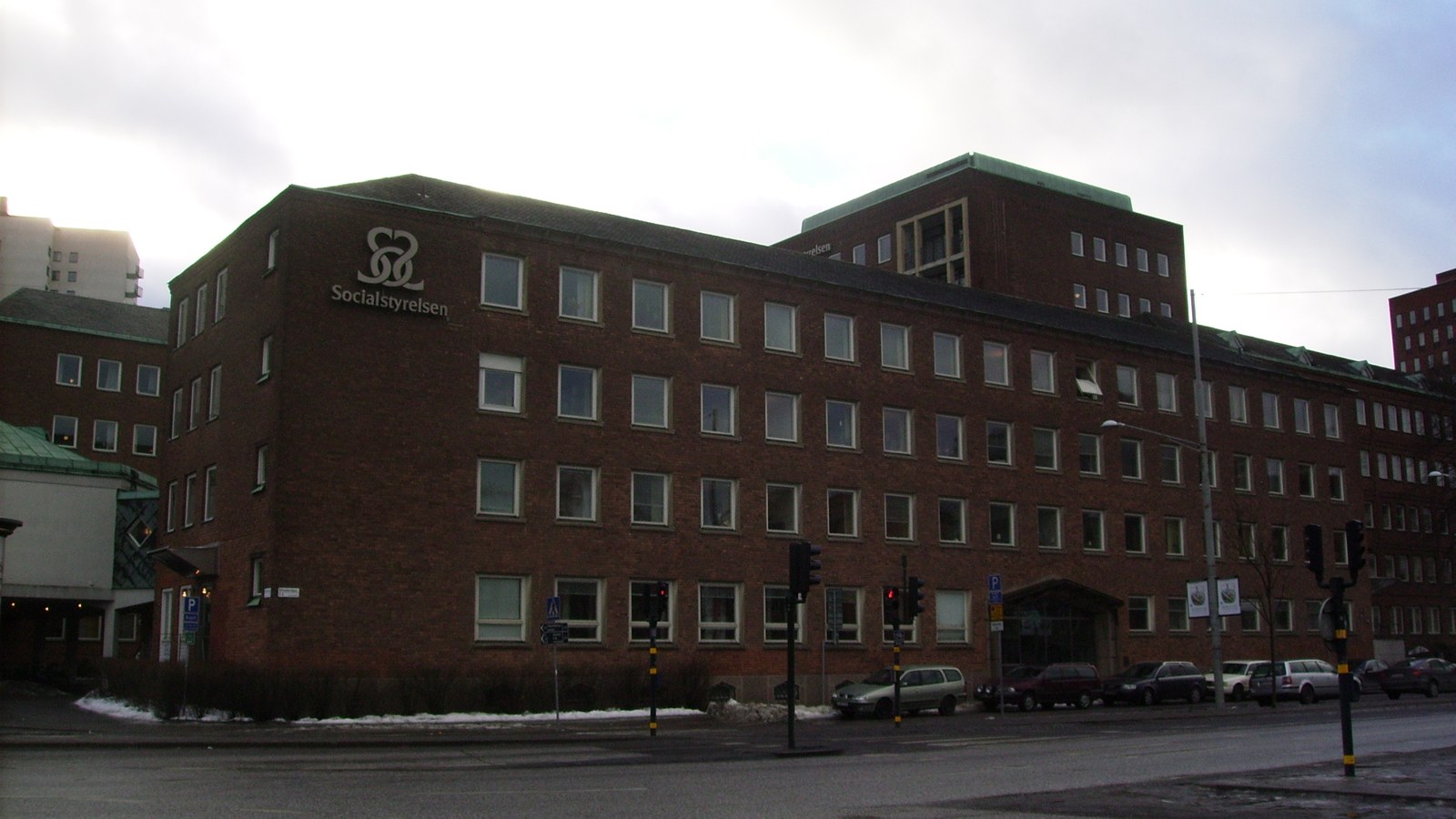
- National Board of Health and Welfare: Responsible for professional registration and assessment in 22 regulated healthcare professions, including doctors, nurses and dentists.
- Swedish National Agency for Education: Assesses foreign teacher-training and preschool-teacher qualifications for the award of Swedish teacher registration.
Sources & further reading
Share the article
Translated from Swedish with AI assistance. Read the original.


