
Europe’s best macchiato? Why Pristina is the continent’s unexpected coffee capital
In Kosovo’s young capital, Pristina, coffee is rarely just a morning routine – it shapes the rhythm of the day and the city’s social life. With its perfect balance of espresso and smooth, foamed milk, the city’s macchiato has earned a reputation for surpassing its Italian counterpart. Here is the story behind a coffee culture that has shaped an entire society.
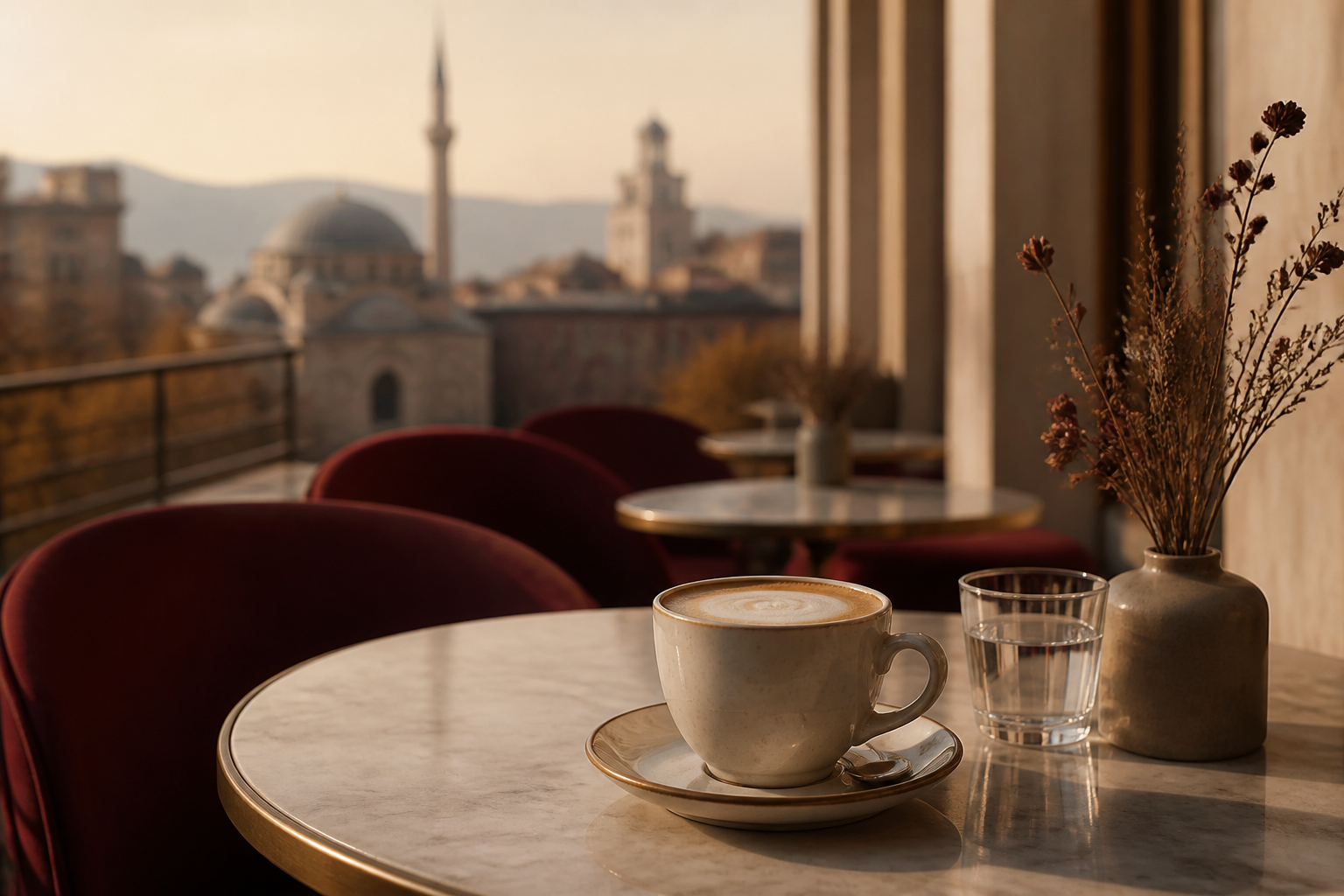
Claiming that Europe’s – or even the world’s – best macchiato can be found in Kosovo’s capital, Pristina, might sound like a provocation to an Italian coffee purist. But for anyone who has spent a morning in one of the city’s countless cafés, the claim seems less outrageous. The city’s coffee-making craft has attracted attention beyond the Balkans, and what is usually singled out is the balance between rich espresso and silky-smooth milk foam.
But coffee in Pristina is much more than a delicious drink. It is the engine of the city’s social life, a historical legacy and a symbol of the country’s modern identity.
The craft behind the foam
So what makes a Kosovan macchiato so special? The secret lies in the details and an almost religious respect for the craft. Unlike the often dry, bubbly milk served in many parts of Western Europe, Pristina’s macchiato is characterised by extremely dense, creamy microfoam. It should have the same texture as freshly whipped cream and be poured over perfectly extracted espresso.
The care that goes into the espresso quickly becomes apparent to anyone who starts exploring the city’s cafés. Cafés are everywhere, and the quality is often surprisingly consistent, whether you order your coffee at a simple hole in the wall in a residential neighbourhood or at one of the trendy design bars along the main thoroughfare, Mother Teresa Boulevard.
The café as a social living room
To understand coffee’s central role in Kosovo, we need to look back. During the turbulent years of the 1990s, when Albanian society was forced to build parallel structures outside the official institutions, cafés became a lifeline. They served as informal meeting places, political headquarters and cultural havens where news was shared and the future discussed.
This tradition has lived on in modern Kosovo. The country has one of the youngest populations in Europe, with more than half of its residents under 30. For this young, well-educated and deeply sociable generation, the café is the natural living room. With youth unemployment periodically high, and visa rules long limiting opportunities to travel abroad, café culture became a way to create a modern European life of their own at home.
“Shall we go for a coffee?”
In Kosovo, the phrase A t’shkojmë për kaffe (Shall we go for a coffee?) is rarely an invitation to a quick meeting. It is the beginning of a ritual that can last for hours. You order a macchiato – almost always served with a glass of cold water – and let the conversation take as long as it takes. This is where deals are made, political debates unfold and friendships are forged.
Café life in Pristina runs from early morning until late evening. It starts around seven in the morning, when local neighbourhood cafés fill with regulars on their way to work, and continues long after dark, as coffee cups are gradually replaced by local wine or a cold beer.
Discovering Pristina means slowing down and adapting to this rhythm. Sit down at a café, watch the bustling life around you and enjoy a craft refined to perfection. The coffee cup is the best way to decipher the soul of Europe’s youngest capital.
Facts
Sources & further reading
- prishtinainsight.comA day in Prishtina
Share the article
Translated from Swedish with AI assistance. Read the original.


