
Eight countries on two wheels – cycling the new Trans Dinarica through the Balkans
One of Europe’s most ambitious cycling projects is here. Trans Dinarica is the first continuous cycling route to link the entire western Balkans. From the snow-capped Julian Alps in the north to Albania’s wild river valleys in the south, the route offers 5,500 kilometres of spectacular natural scenery, gravel roads and deep-rooted local hospitality.
Travelling through the Balkans has long been associated with rail adventures or winding road trips along the Adriatic coastal road. But for anyone wanting to get really close to the region’s varied landscapes, its quiet mountain ranges and the people who live there, there is now a brand-new alternative. Trans Dinarica is more than a cycling route; it is a geographical and cultural bridge stretching across eight countries: Slovenia, Croatia, Bosnia and Herzegovina, Montenegro, Albania, North Macedonia, Kosovo and Serbia.
The idea behind the route is simple but brilliant: to create a safe, well-structured route close to nature that avoids busy roads and instead prioritises forest roads, historic trade routes and quiet country lanes. For cycling and adventure travellers, it opens up a world that previously required extensive planning and advanced navigation.
The route’s anatomy: gravel roads and local hospitality
Trans Dinarica has been developed with a clear focus on sustainable tourism. Rather than directing visitors to tourist hotspots that are already overcrowded, the people behind the route have deliberately mapped it through smaller communities, national parks and agricultural areas. The idea is for cyclists to eat at local inns, stay in family-run guesthouses and buy their provisions directly from farmers along the way.
Navigation is entirely digital. Using the Ride with GPS platform, cyclists can download exact GPX tracks for the whole route or for specific sections. The route is divided into daily stages averaging 50 to 60 kilometres, often with around 1,000 to 1,500 metres of climbing per day. This means you can tailor the trip to your own fitness level and choose whether to ride an intensive week in a single country or set off on a month-long trans-Balkan adventure.
Slovenia’s green start: from Alpine rivers to wine country
The adventure begins in the north, where the Julian Alps meet Mediterranean breezes. Slovenia sets a high standard for the rest of the journey with its well-developed green infrastructure. The route starts in the dramatic Soča Valley, known for its almost impossibly turquoise river, which cuts through deep limestone gorges. Cycling here is Alpine and challenging in places, but the reward is spectacular views of the Slovenian peaks.
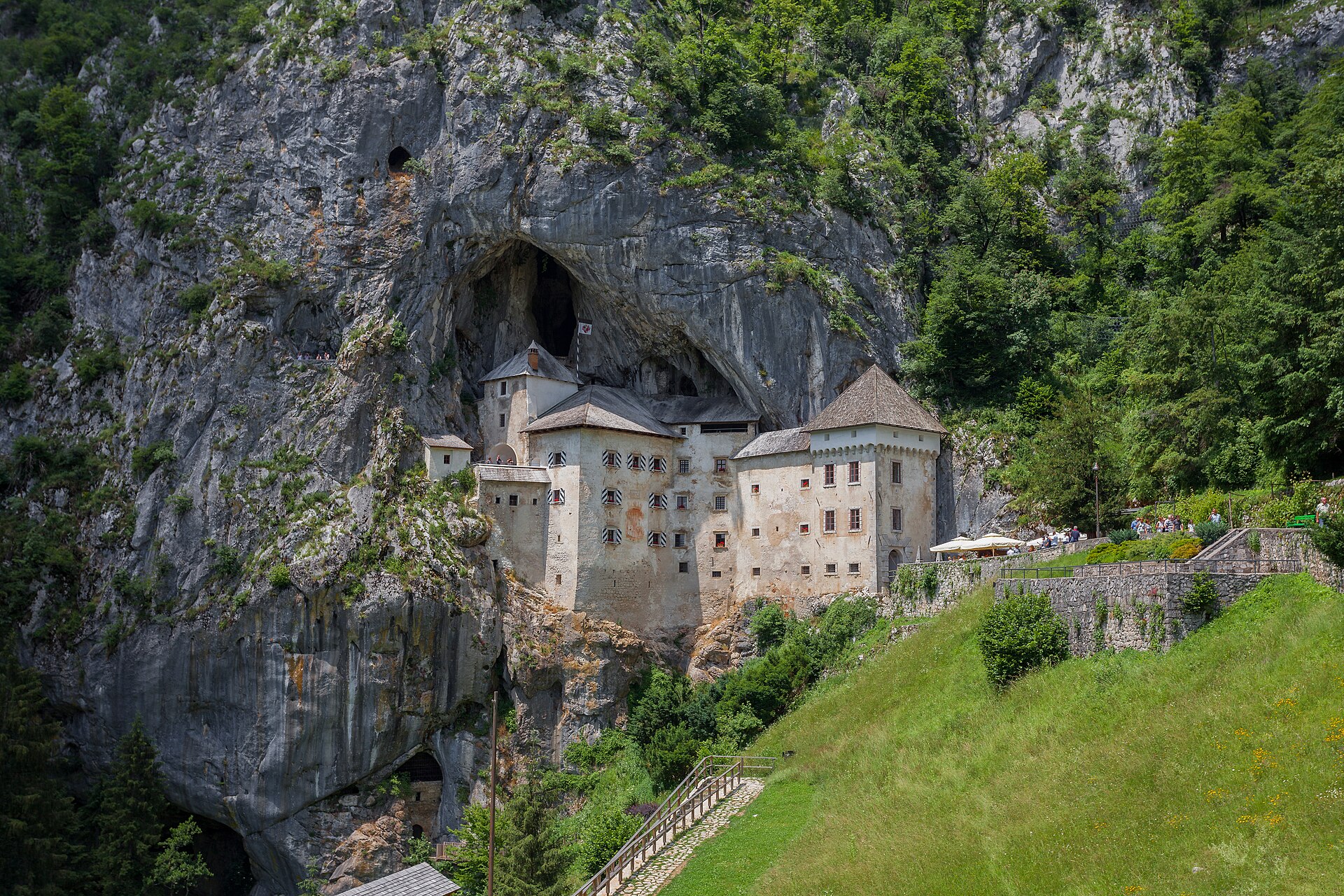
As the route heads south, the landscape changes quickly. The mountains soften and give way to the rolling hills of the Goriška brda wine region. Here you cycle literally along the border with Italy, through olive groves and vineyards where local grapes such as rebula produce fresh, mineral-rich wines. It is the perfect place for a leisurely lunch at a local “turistična kmetija” (tourist farm) before continuing towards Slovenia’s karst landscape. Before crossing the border into Croatia, the route passes the world-famous Škocjan Caves, an underground network of vast chambers and one of the region’s most dramatic natural attractions.
Croatia and Bosnia: barren coastal mountains and hidden mountain lakes
When Trans Dinarica crosses into Croatia, it leaves much of the coast behind and heads into the heart of the Dinaric Alps. Velebit Nature Park dominates here, a vast mountain range running parallel to the Adriatic Sea. Cycling here is wild and demanding at times. The landscape is rugged, grey and dramatic, with sharp contrasts between the blue sea to the west and the deep forests of the Lika region to the east. The route passes close to Dinara, Croatia’s highest peak, which gives its name to the entire mountain range.
The journey continues into Bosnia and Herzegovina, a country that may offer the most surprising cycling along the whole route. Here the mountains become more forested and richer in water. The route winds its way to the mirror-still Ramsko jezero (Rama Lake), where a Franciscan monastery sits beautifully on a peninsula in the blue water.
For those prepared for a serious climb, Prokoško Lake awaits, a glacial lake situated at just over 1,600 metres. The lake is surrounded by traditional wooden shepherds’ huts, known as katuns, where local shepherds still make cheese and serve freshly baked bread to passing adventurers. It is in moments like these, far from paved roads and mobile phone coverage, that the true soul of Trans Dinarica reveals itself.
The eastern Balkans’ wilderness: Montenegro’s canyons and Albania’s river valleys
As the bike rolls into Montenegro, the drama steps up another notch. The route runs straight through Durmitor National Park, an area shaped by glacial valleys, deep pine forests and dizzying peaks. Here you cycle along the edge of the Tara Canyon, Europe’s deepest river gorge, where turquoise water flows more than a thousand metres below your wheels.
After Montenegro comes Albania, a country whose cycling infrastructure is developing rapidly. Here the route follows the wild river valleys in the north, where tarmac is often nowhere to be seen, replaced by old military roads and stone-laid paths. It is a physical challenge, but the hospitality in Albanian mountain villages is legendary. Being welcomed with a cup of strong coffee and a glass of raki after a long day in the saddle is the rule rather than the exception.
The route ends in the borderlands with North Macedonia, beside the ancient Lake Ohrid. Here you climb through Galičica National Park, a mountain ridge separating Lake Ohrid from Lake Prespa. From the top of the pass, there is an almost magical view of both enormous lakes at once: a fitting finale to a journey spanning cultures, borders and landscapes.
Facts
Trans Dinarica at a glance
- Total length: Around 5,500 kilometres.
- Countries: Slovenia, Croatia, Bosnia and Herzegovina, Montenegro, Albania, North Macedonia, Kosovo and Serbia.
- Bike type: Gravel bike with wide tyres (at least 40 mm) or a lightweight mountain bike (hardtail).
- Best time to travel: May to June and September to October. The summer months can be extremely hot inland, and the high mountain passes may be snow-covered until May.
- Navigation: The route is not marked with consistent physical signs across all borders. Instead, use the official GPX routes via the Ride with GPS navigation app.
Share the article
Translated from Swedish with AI assistance. Read the original.


