
Croatia's surplus sheep wool to become fertiliser
Sheep must be sheared even when no one wants to buy their wool. Around Knin and Vrlika, organised collection aims to clear farmers' stores and turn the material into raw material for fertiliser pellets. Under the Mosaic of Life project, over twelve tonnes have been collected – but a functioning collection service is just the beginning of the road towards a sustainable business.
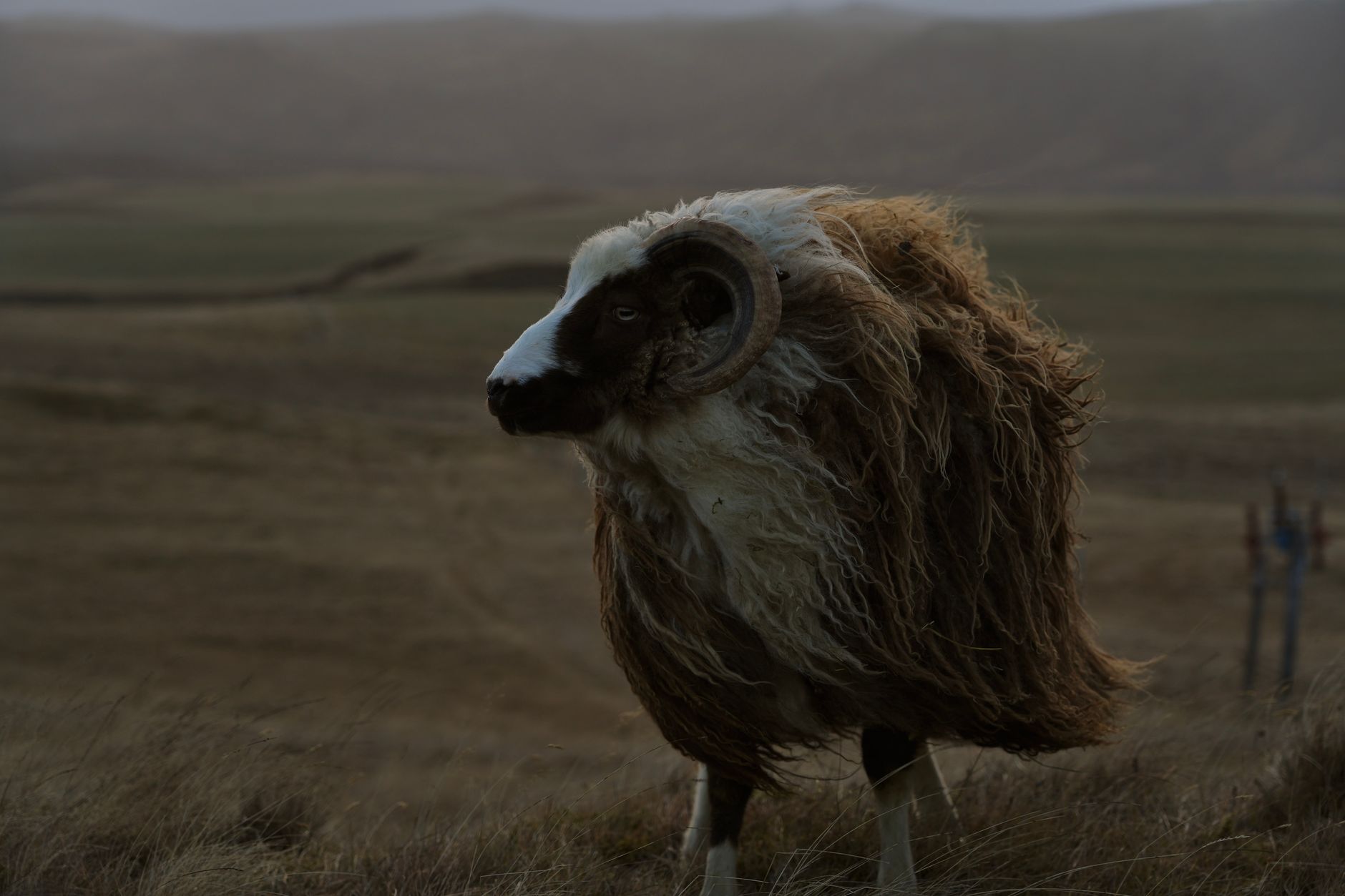
A sack of sheep's wool is not automatically an asset. In the absence of a buyer, it becomes something to store, move and ultimately dispose of. The next shearing comes regardless of whether last year's wool has left the farm.
This is the problem that the wool collection initiative within Mosaic of Life is tackling in the Croatian hinterland. Around Knin, Vrlika and Kijevo, close to the Dinara mountain range, sheep farmers' surplus wool is being directed towards an alternative use to textiles: pelletised fertiliser.
The nature conservation organisation Udruga Biom reports that more than twelve tonnes of sheep's wool have been collected. This is a tangible result. How much of this has subsequently been turned into finished fertiliser, sold and used in agriculture is another question. The distinction matters: the project's goal is to create a functioning supply chain, not just to move the sacks to a new warehouse.
The wool exists – but the market is missing
Wool is not a uniform raw material. The coarseness, length, cleanliness and uniformity of the fibres dictate what they are suitable for. Material that performs poorly in a soft garment is not necessarily useless, but it requires a processor with a different end product in mind.
Furthermore, several steps lie between shearing and textiles. The wool must be sorted, transported, washed and processed. The fact that it is natural and renewable does not make these stages cost-free. If a functioning chain between farm and manufacturer is lacking, even usable fibres may end up left with the livestock keeper.
For a sheep farm, this presents a practical problem. The wool takes up space and must be managed so that it does not mix with other waste or deteriorate during storage. This adds extra work for a product that may yield no income. The cost, therefore, is not just potential disposal fees, but also time and space.
The fertiliser route changes the equation. Instead of asking if the fibre is good enough for yarn, the question becomes what the material can contribute to the soil. Consequently, different properties become important – but the need for sorting and quality control does not disappear.
Collection is part of the solution
Udruga Biom and Ekološka udruga Krka Knin are the key players behind the collection efforts in the area. Their role is vital precisely because an individual farm's wool and a processor's raw material requirements rarely meet on their own.
Organised collection requires several day-to-day operations to work in harmony: communicating with farmers, registering wool, planning pick-ups and having a recipient who knows what they are getting. A farmer needs to know whether the wool must be sorted by quality and how it should be packed. The collector needs to know what volumes to expect and where they are located.
The five-year plan for the collection should be distinguished from work already completed. A plan outlines an intention to return; the figure of over twelve tonnes describes material that has actually been gathered. Regularity is crucial if farmers are to rely on a solution after the next shearing as well.
There is also an economic distinction that is easily lost in the word "collection": free removal is not the same as purchasing. In the first instance, the farm avoids a handling cost. In the second, it is also paid for the raw material. According to the collection invitation, Ekološka udruga Krka Knin provides free collection and removal, while Fema d.o.o. from Otočac buys the wool for €0.30 per kilogram. Upon registration, participants receive information regarding the collection and the signing of purchase contracts; the project also supplies sacks.
From fibre to pellets
Wool consists largely of keratin, a protein containing nitrogen. As the material decomposes, nutrients can be released. This is the fundamental reason why sheep's wool is of interest as a raw material for fertiliser.
Pelletising is about transforming the bulky material into a form that is easier to package, dose and spread. Generally, the wool needs to be inspected, processed and compressed. The required pre-treatment depends on the raw material and the manufacturing process. It cannot be assumed that every sack can be fed directly into a machine.
Foreign materials such as plastic and twine have no place in fertiliser. Moisture, contamination and variations between deliveries also need to be managed by the processor. However, the exact quality requirements for the Mosaic of Life collection are not detailed in the available materials.
Collection is not a complete business model
The distinction matters: the project's goal is to create a functioning supply chain, not just to move the sacks to a new warehouse.
According to Biom, the wool has been delivered to companies that will use it as raw material for organic fertiliser made from pelletised sheep's wool. The figure for the collected volume does not in itself reveal who processed the wool or how much finished product was generated. Therefore, it is more accurate to describe the material as destined for fertiliser pellets than to count the entire quantity as produced fertiliser.
A separate Croatian example is Woona, which offers fertiliser made from pelletised sheep's wool. This demonstrates how this application can take the form of a consumer product. However, Woona should not be confused with a verified recipient of the wool from Mosaic of Life; no such link has been established here.
The comparison is nevertheless useful. For the farmer, the issue is about getting rid of a waste product or being paid for a raw material. For the buyer of the fertiliser, it is about something else: content, dosage, usability and price. Solving the first problem does not automatically win over the second customer.
Product claims regarding nutrient release and water retention, for example, must also be distinguished from independently verified cultivation effects. How a wool product performs depends on its composition and how it is applied. The raw material's origin is a selling point, but it is no substitute for knowledge of the finished product.
Who pays for the journey from the farm?
Even wool provided free of charge costs money to turn into fertiliser. Someone must coordinate collection, load, transport, store, process and package it. After that, distribution and buyers are needed. Dealing with bulky raw materials from multiple farms makes logistics a central part of the calculation.
The available documentation does not provide a comprehensive picture of costs, sales revenues or customer segments for the project's wool. It is therefore impossible to conclude that the collection is already commercially viable. Project funding can make it possible to test a supply chain, but is no proof of its self-sustainability.
On the other hand, the benefit to farms can arise before such a business is established. A reliable collection service reduces the amount of material left lying around and makes waste management more predictable. This is a tangible improvement, even if the wool has not yet become a profitable by-product.
Grazing land is the context
Around Dinara, sheep farming is intertwined with a landscape of grazed grasslands, scrub and rocky terrain. As the animals graze, they influence which plants thrive and help keep the landscape open. At the same time, grazing pressure and local conditions matter; the conservation benefit cannot be measured solely by the number of sheep.
The wool collection is intended to support livestock keeping by addressing one of its recurring headaches. The link to the landscape is indirect but clear: functioning sheep farms are a prerequisite for continued grazing, and grazing can be crucial for open grasslands.
This does not mean that the tonnes of wool collected can already be translated into restored nature. For such conclusions, monitoring of the land and its development is required. The documented step is more modest: wool has been collected. The next test is whether the same path from farm to viable product works again, shearing after shearing.
Sources & further reading
Share the article
Translated from Swedish with AI assistance. Read the original.


