
Bosnian Wood Craftsmanship in Scandinavian Homes: When Minimalism Meets Time-Honoured Tradition
A unique collaboration between some of Scandinavia’s most established designers and a historic Bosnian family business has shown that traditional craftsmanship has a natural place in the modern home. By uniting the unique woodcarving technique rezbarenje with Scandinavian design sensibility, furniture manufacturer Zanat has achieved great international success.
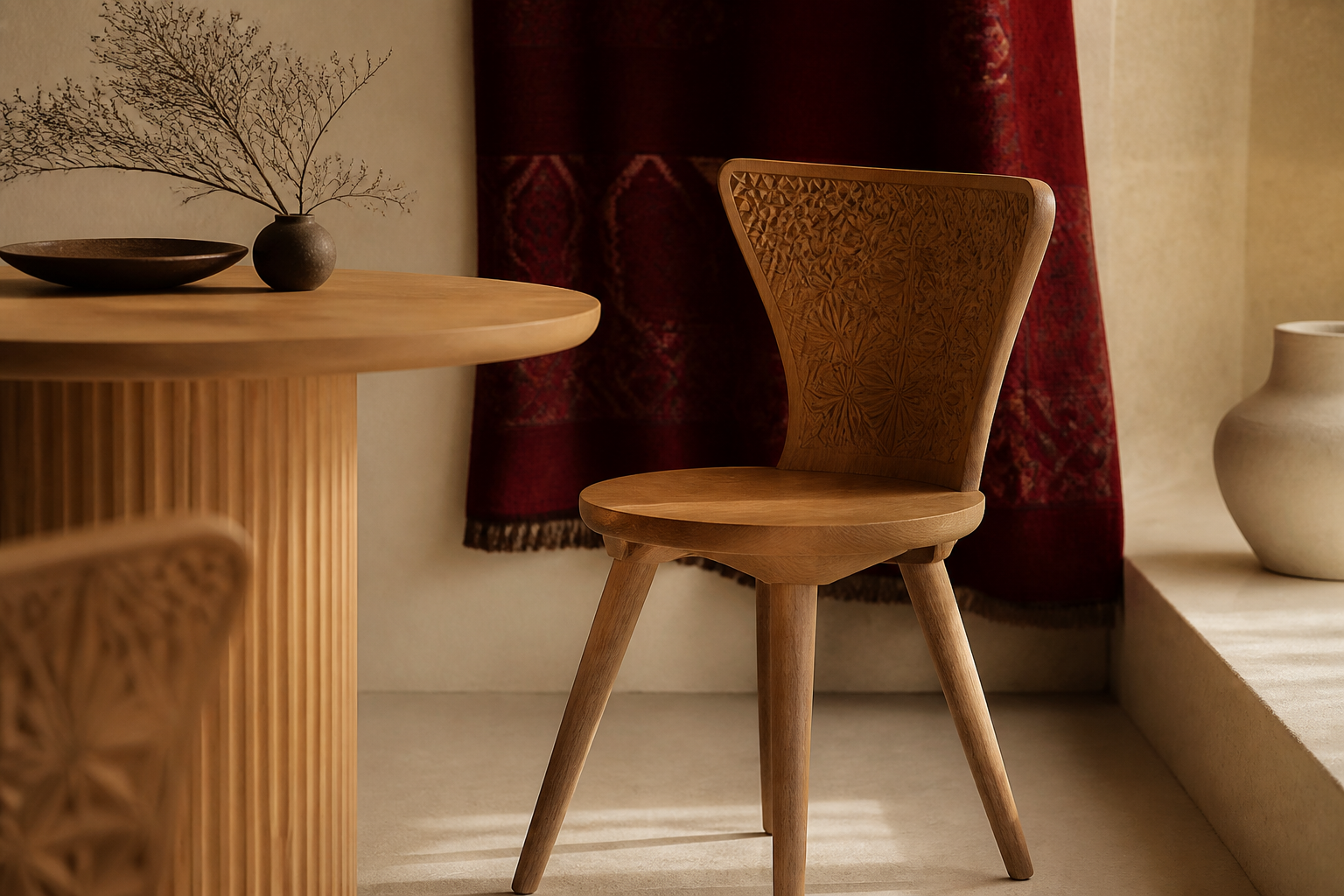
During Stockholm Design Week in February 2015, the premises of Stockholms Auktionsverk (the Stockholm Auction House) on Nybrogatan were filled with a distinct scent of wood and curiosity. What was presented to the Scandinavian design public was the result of an unusual collaboration – a bridge built of design and craftsmanship between Sweden and Bosnia and Herzegovina.
The project demonstrated how a traditional cultural heritage can be revitalised and made relevant for a modern, international market without losing its soul.
The time-honoured heritage of Konjic
At the centre of this design journey is Rukotvorine, a family business from the town of Konjic in Bosnia and Herzegovina. Konjic is historically known for its strong tradition of woodworking and furniture manufacturing, and in particular for the technique rezbarenje.
This hand-drawn woodcarving is an ancient, time-consuming and deeply personal technique requiring immense precision. At the start of the collaboration, the craft was nominated for UNESCO’s Representative List of the Intangible Cultural Heritage of Humanity (officially inscribed in 2017), a status that underscores its unique historical value.
A Swedish-Bosnian design bridge
The collaboration began in 2014 through 'Design Project Brilliant', an initiative made possible with support from the Swedish Embassy in Sarajevo. The aim was to promote exchange and show how Scandinavian ideas could meet Bosnian craftsmanship.
Among other initiatives, a creative workshop was organised at the Academy of Fine Arts in Sarajevo. This paved the way for deeper collaborations with some of the Nordic region’s most established design names: architect Gert Wingårdh, designer Monica Förster, Finland’s Harri Koskinen, and Sara Helder.
Zanat – where two worlds meet
As an extension of this exchange, the joint brand Zanat was launched. The collection combines the clean, functional, and minimalist Scandinavian design language with the detailed, hand-carved patterns that form the core of Bosnian cultural heritage.
What might have seemed on paper to be a contrasting clash proved in reality to be a perfect harmony. The hand-carved details lent the minimalist furniture a tactile and warm feel that quickly appealed to design enthusiasts.
The venture proved to be perfectly timed. Right from its launch in Stockholm, Zanat's furniture was honoured with several awards. This success has not only placed Bosnian wood craftsmanship on the global design map but has also demonstrated how genuine craftsmanship and sustainable production can create profitable cross-border business opportunities.
Sources & further reading
- apunetwork.netSkandinavisk design möter traditionellt bosniskt hantverk.
- nordiskagalleriet.seObjects – Handla klockor eller vaser i unik design från Zanat
- mittbosnien.seBosniskt träsnideri -från UNESCO:s kulturarvslista till Stockholm
Share the article
Translated from Swedish with AI assistance. Read the original.


