
Banitsa – The Bulgarian Cheese Pie Where the Crunch Makes All the Difference
Thin sheets of pastry, eggs and salty cheese build Bulgaria's banitsa. But it is the distribution between them that determines whether the result is crisp and juicy or heavy and soggy. This is how the layered cheese pie works – and how to choose the ingredients for it in a Swedish kitchen.
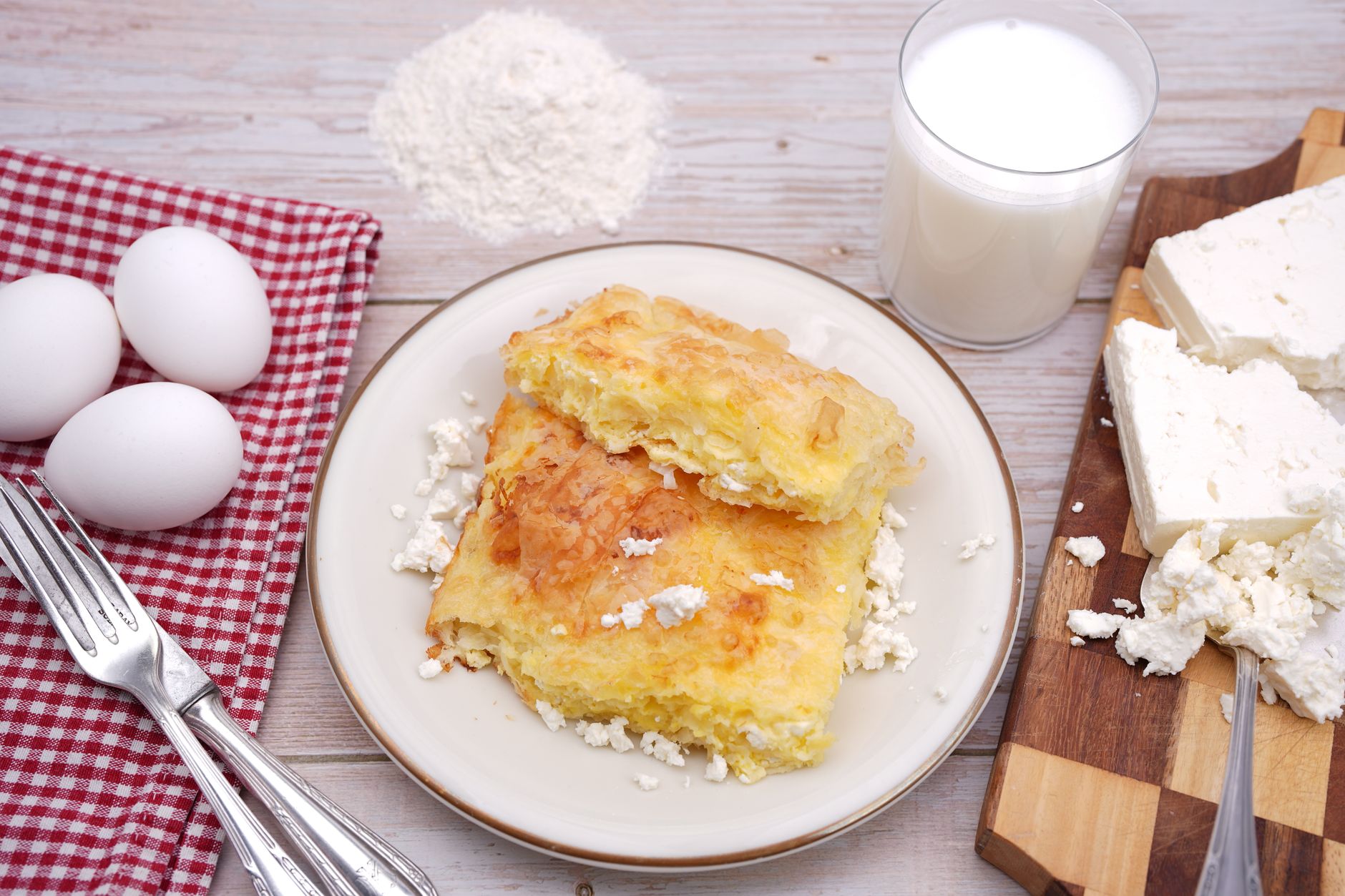
Filo pastry should not be rolled out. It should be unfolded, protected from drying out and given a little fat between the layers. Right there, working with banitsa differs from a Swedish cheese pie with a kneaded pastry base: here, the crust and the filling are built together, sheet by sheet.
When the knife cuts through the finished pie, the surface should shatter into thin flakes. Further down, the pastry is softer, surrounded by egg and crumbled cheese. The contrast is the whole point. Banitsa needs to be neither entirely crisp nor compact and creamy.
In Bulgaria, it is equally at home on the breakfast table or bought from a bakery. It comes in several designs, including with the pastry sheets laid in layers or rolled around the filling and shaped into a spiral. For the home kitchen, the layered version is a great starting point: no rolls need to hold together, and a torn sheet of pastry can still be used.
Three ingredients with different roles
Filo pastry is thin, unrolled in the home kitchen, and sensitive to air. Left on the worktop unprotected, it dries out and becomes brittle. In the oven, however, this very thinness becomes an asset. Sheets separated by a thin layer of fat are able to form crisp layers instead of sticking together into a dense mass of dough.
The eggs hold the filling together as they set in the heat. They also help bind the cheese to the pastry, so that a sliced piece does not just become loose crumbs between crisp leaves. Too much filling in one place, however, creates a heavy section that requires longer to bake through.
Sirene contributes saltiness, acidity and moisture. It is a white brined cheese used in Bulgarian cooking, available made from various types of milk. In banitsa, it is crumbled into the filling; do not think of it as a grating cheese that should melt into long strings. Small pieces of cheese provide both flavour and texture.
Butter or oil has a different task to the eggs. The fat helps keep the pastry layers apart. Increasing the amount of egg therefore does not replace fat between the sheets, just as extra butter cannot hold together a filling that is too loose.
Sirene and feta are not the same cheese
Feel free to start by asking for sirene in a grocery store with a Bulgarian or wider Balkan selection. When buying online, the product name, country of origin and list of ingredients are more useful than just the image of a white cheese. Availability needs to be checked with the retailer in question.
Sirene is not a completely uniform ingredient. Both the type of milk and the production process affect the taste and how firm or moist the cheese is. Therefore, taste it before mixing the filling. A distinctly salty cheese rarely needs the addition of more salt.
Feta works as a substitute, but should be described as exactly that: a substitute. It provides a related combination of saltiness, acidity and crumbiness without being identical to Bulgarian sirene. Nor can you assume that feta is always drier or saltier: compare the actual cheeses, not just the names on the packaging.
Allow cheese kept in brine to drain before crumbling it. If it still releases a lot of liquid, the filling will need less of other moist ingredients. If the cheese is dry and crumbly, a little natural yoghurt can help to distribute it. The goal is a mixture that can be dolloped and spread, not a liquid that immediately runs to the bottom of the dish.
Bulgarian yoghurt goes well flavour-wise with its acidity, but ordinary natural yoghurt can also be used. The consistency matters: a thin yoghurt adds more runny liquid than a thick, strained variety.
Build the pie without pressing it together
Choose ready-made filo pastry, not puff pastry. The thicker, laminated layers of puff pastry produce a completely different bake. If the filo pastry is frozen, it should be thawed according to the packet instructions before separating the sheets.
Make the filling and melt the butter before opening the packet. Also have your baking dish and a pastry brush ready. The waiting pastry sheets can be kept under plastic wrap or a barely damp tea towel; a wet towel risks making them sticky.
The workflow here describes the technique. It is not a tested recipe with set quantities, dish sizes and oven times.
Grease a baking dish and lay in a first sheet of pastry. Brush thinly with melted butter or sunflower oil and continue building with more sheets. Then spread a thin layer of egg and cheese filling over the surface. Continue alternating pastry, fat and filling, finishing with pastry that gets a little fat on top as well.
The important thing is to distribute the filling across the entire dish. A thick mound in the middle and dry edges will result in uneven baking. The sheets, however, do not need to lie flat and smooth. Gentle folds provide structure, and torn pastry can be overlapped inside the pie.
It is better to use a dish where the filling can be spread in relatively thin layers rather than stacking everything into a tall, dense cake. Do not compress the structure. The filling must make contact with the pastry, but the layers do not need to be packed down.
A crisp surface begins with the filling
A soggy bottom cannot always be saved by longer baking. If too much free liquid has pooled at the bottom, the top may brown before the lower sheets are cooked through. Therefore, start with drained cheese and be sparing with extra yoghurt.
The fat should lie as a thin film, not form puddles. Butter on top helps the surface to colour, but is no guarantee that the centre is done. The pie needs to be baked in a preheated oven until the egg filling has also set.
Look for several signs together: a golden surface, dry and brittle outer edges, and a centre that holds together rather than sloshes when the dish is gently shaken. If the top darkens before the filling has set, it can be loosely covered with foil during the remaining baking time.
Then let the banitsa rest for a while before slicing it. This allows the filling to stabilise and makes the pieces easier to lift. If you want to retain a distinct crunch, do not cover it tightly while it is still steaming; trapped steam will soften the surface.
When reheating, the oven is a better choice than the microwave if the goal is crisp edges. Heat the pieces without a tight lid and keep an eye on them so the top does not burn.
Roasted peppers once you have the basics down
Roasted red peppers pair well with the salty cheese, adding sweetness without changing the fundamental concept of the banitsa. However, they also bring moisture. This is especially true of jarred peppers, which need to be drained thoroughly and preferably patted dry before use.
Cut the peppers into small pieces and distribute them thinly throughout the filling. Avoid large, wet patches that trap moisture between the pastry sheets. If the basic filling contains yoghurt, its quantity needs to be adjusted depending on how wet the peppers are. The solution is not to automatically add more eggs: they also need to cook through and will alter the nature of the filling.
Serve the banitsa warm or lukewarm with natural yoghurt on the side. This allows the acidity to meet the salty cheese without having to work more liquid into the pie itself. A simple combination where every element shines: the crisp pastry, the cohesive filling, and the saltiness of the sirene.
Sources & further reading
- 196flavors.comBanitsa - Traditional Bulgarian Cheese Pie Recipe | 196 flavors
- tarasmulticulturaltable.comBanitsa (Bulgarian Cheese Pie) - Tara's Multicultural Table
- balkanrecipes.comBulgarian Banitsa Recipe (Traditional Feta Cheese Pastry)
- sainsburysmagazine.co.ukBulgarian banitsa recipe | Sainsbury's Magazine
Share the article
Translated from Swedish with AI assistance. Read the original.


